
Tick vs. flea might sound like a toss-up, but telling them apart is the first step to getting rid of them. Ticks are eight-legged arachnids that swell after feeding, while fleas are six-legged insects that stay flat no matter how much they bite.
Ticks live outdoors in grass and leaf litter, feeding slowly for days, while fleas set up camp indoors in carpets and bedding. Both can make your pets and family miserable, but they require completely different removal methods and treatments.
In this guide, you’ll learn exactly how to spot each pest, what health risks they bring, and the most effective ways to kick them out of your home. Stick around for the simple, practical steps that will save you time and frustration.
At A Glance
- Ticks are arachnids with eight legs; fleas are insects with six legs.
- Ticks feed slowly for days; fleas feed rapidly multiple times daily.
- Ticks lay eggs in soil; fleas lay eggs on the host.
- Ticks thrive outdoors in grass; fleas are indoor homebodies in carpets.
- Ticks transmit Lyme disease; fleas spread tapeworms and cause allergic dermatitis.
Are Ticks and Fleas the Same Thing?
Are ticks and fleas the same thing? Not at all, and knowing the difference is key for effective pest control. Ticks are arachnids, which means adults have eight legs like spiders, while fleas are true insects with six legs and a flattened body for slipping through fur.
Knowing the difference between ticks and fleas is key for effective pest control.
With over 700 tick species worldwide, the cat flea is the main troublemaker on pets. A quick physical check solves it: ticks have a single fused body segment, but fleas are tiny wingless jumpers, just 1 to 3 mm long.
Both are blood feeders, but that is where their similarity ends. If you spot a critter on your pet, count the legs and you will know your next step for home treatment.
Eight legs means a tick, and six legs means a flea. Simple biology makes your pest control plan much easier to follow. To reduce tick bite risk, treating clothing and gear with permethrin bonded to fabric is highly effective.
What Do Ticks and Fleas Look Like?
Ticks and fleas differ immediately in size and leg count. Ticks, as arachnids, start life with six legs as larvae but boast eight as adults. Fleas, being true insects, stick with six legs their whole lives and measure a mere 1 to 3 mm.
Body shape tells the story too: ticks have a single, fused body segment with visible mouthparts on hard species. Fleas are laterally compressed like tiny living pancakes, with backward directed spines called ctenidia that anchor them in fur.
For effective pest control, recognizing these differences helps you choose the right treatment. Think of ticks as slow, eight-legged hitchhikers that swell up like a grape. Fleas are fast, six-legged jumpers built for speed and stealth, making flea infestations tricky to manage.
If you spot these pests on your pet or in your home, professional pest removal services can target both species. Prompt action prevents bites and stops infestations from growing out of hand. Using stainless steel tick tools ensures safe removal without squeezing the tick abdomen.
Size and Leg Count
Fleas and ticks differ in size and leg count more than their shared reputation as tiny bloodsuckers might suggest.
Here is what sets them apart visually for effective pest control identification.
Ticks, as arachnids, have eight legs as adults, while fleas, as insects, have six legs.
That extra pair of legs helps ticks cling to hosts, a key detail for tick removal strategies.
Tick body size varies wildly from barely visible larvae at 1 mm to engorged females at 10 mm.
Fleas stay consistently small at 1 to 3 mm, resembling a sesame seed that stayed compact.
Tick larvae hatch with six legs and gain two more after molting.
Flea larvae also have six legs but keep them without growth spurts, simplifying home infestation checks.
Unfed ticks are flat and tiny, but fed ones balloon dramatically with blood.
Fleas stay the same slim shape no matter how much they feed, making visual inspection easier for prevention.
Bottom line: Ticks are bigger and leggier with variable size, while fleas are smaller, six-legged, and consistent.
For pest control services, knowing these differences helps target treatments effectively.
Non-flammable, DEET-free formulas cut fire risks and avoid aquatic toxicity from chemical runoff.
Body Shape and Mouthparts
In a twist that only biology could dream up, ticks look like a tiny, flattened coffee bean with legs, whereas fleas resemble a sesame seed pressed sideways for better fur navigation.
This difference in body shape stems from their distinct evolutionary origins, which is key for effective pest control identification.
Ticks are arachnids, related to spiders, with a fused, oval body and visible mouthparts.
Fleas, being insects, have a slim, side-squeezed frame built for darting through hair and resisting common flea treatments.
For visual identification, ticks show their piercing mouthparts from above.
Fleas hide theirs beneath a small head and rely on backward-directed spines, called ctenidia, to anchor in fur.
An engorged tick can balloon to the size of a grape, a clear sign for removal during a routine pest inspection.
A flea stays tiny, like a speck of pepper, which makes prompt pest control services essential for homes with pets.
Bottom line: ticks are flat and round, while fleas are compressed and narrow.
Understanding these structures helps choose the right treatment for biting pests around your property.
High-tension grip tools eliminate slipping and provide full control during removal.
How Do Tick and Flea Life Cycles Compare?
Fleas lay eggs on the host, which then fall off into carpets and bedding. Ticks lay eggs in soil or leaf litter, not directly on the animal.
Tick larvae have six legs and will seek a small host like a mouse. Flea larvae are legless, feed on adult flea feces, and actively avoid light.
Fleas make a silk cocoon during their pupal stage and can lie dormant for months. Ticks molt into eight-legged nymphs, which then seek a larger host for a blood meal.
Adult fleas must feed on blood to reproduce and can live their entire life on your pet. Ticks can survive over a year without a meal by waiting patiently in grass or brush.
This life cycle difference explains indoor survival for these pests. Fleas thrive in your heated home, while ticks usually die indoors without enough humidity.
For effective year-round flea and tick prevention, you must treat both the pet and the home environment. Using a quality spot on treatment and an indoor fogger can break the flea cycle completely.
How Do Ticks and Fleas Feed on Your Pet?
Understanding how ticks and fleas feed is key to stopping them effectively.
Ticks are slow, steady feeders; they embed mouthparts and drink blood for days, swelling like a tiny grape.
Fleas are fast feeders, biting multiple times daily and living full-time on your pet.
Host specificity differs: many ticks jump from rodents to dogs to humans, while the cat flea usually sticks to furry pets.
Seasonal activity shapes risk: ticks thrive in spring and fall, but fleas stay active indoors year-round.
Permethrin-treated clothing or gear can provide protection lasting up to 70 washes against ticks and other biting insects.
Where Do Ticks and Fleas Live and Thrive?
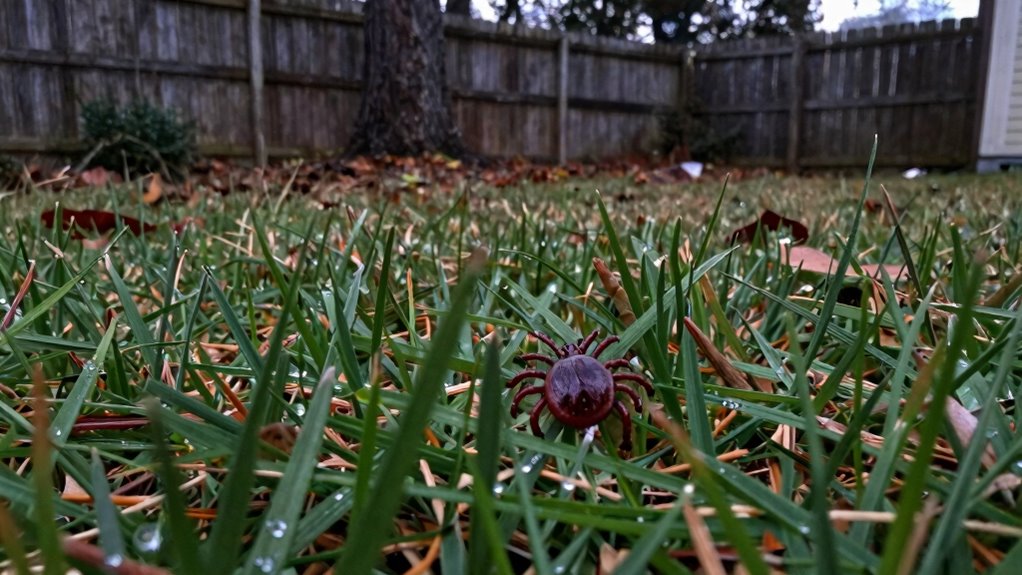
The map of where ticks and fleas thrive is a study in contrast.
Ticks are outdoor adventurers with a taste for wild animals.
Fleas are cozy homebodies that never want to leave your pet.
Their environmental habitats and feeding locations reveal these distinct lifestyles.
Ticks wait on grass and brush edges.
They do not fly or jump to find meals.
Fleas set up camp in carpet fibers and pet beds.
They hop aboard for an easy snack.
Ticks feast on deer, rodents, and birds.
They then drop off to molt in leaf litter.
Fleas live on one host full-time.
They eat, mate, and poop in your pet’s fur without ever leaving.
Ticks need nature’s wilderness.
Fleas crave central heating in your home.
Both sadly think your dog is a freeway rest stop.
Keep that lawn mowed and vacuum daily.
Your couch isn’t a tick hotel, so protect your home with regular pest control treatments like a spray that contains an insect growth regulator to prevent reinfestation for up to seven months.
What Diseases Do Ticks and Fleas Spread to Pets?
Before a pet owner even spots a single tick or flea on their dog, these tiny parasites could already be passing along harmful germs. Ticks are notorious vectors, transmitting Lyme disease, anaplasmosis, and ehrlichiosis, bacterial infections that can cause fever, joint pain, and kidney trouble.
Fleas spread tapeworms when a pet grooms and swallows an infected flea, plus they can trigger severe allergic reactions. Using a reliable flea and tick preventive keeps your pet safe from these pests. Applying granules around the perimeter of your yard can help create a protective barrier against these pests.
| Parasite | Common Disease | Key Symptom |
|---|---|---|
| Tick | Lyme disease | Lameness, fever |
| Flea | Tapeworm | Weight loss, scooting |
| Tick | Anaplasmosis | Lethargy, joint pain |
Climate change is expanding tick habitats, raising risks for emerging zoonoses like babesiosis. Monthly preventives, around $15 to $25, offer solid protection and are easy to apply at home.
Bottom line, skip the gamble, keep pests off, and save your vet bill and your sanity. Buy a topical flea and tick treatment today for peace of mind.
What Health Problems Do Fleas and Ticks Cause?
Fleas and ticks are more than just simple pests. They cause serious health problems for pets and people.
Flea saliva often triggers flea allergy dermatitis. This makes pets scratch until their skin becomes raw and infected.
Heavy infestations can lead to anemia from blood loss. They can also spread tapeworms to your pet.
Ticks carry Lyme disease and other dangerous infections. These tiny hitchhikers become a real medical threat without proper prevention.
Use vet recommended flea and tick treatments to protect your home. Regular pest control products keep these parasites from taking hold. For clothing and gear, Permethrin spray bonds to fabric, lasting six weeks or six washes and providing a wearable force field against ticks.
Disease Transmission Risks
Fleas are mostly a nuisance, but ticks are the real overachievers of the parasite world. They are second only to mosquitoes in the number of diseases they spread.
Ticks latch on for days and quietly pass bacteria into your pet’s bloodstream. You often notice them only after the damage is done.
This makes ticks a serious human health risk, not just a pet problem. Fleas have their own dark résumé, including a history with bubonic plague.
Today, fleas are more likely to cause tapeworms or anemia in puppies. Steel wool barriers are a key tool for sealing the rodent entry points that bring these pests inside. Here are the key disease transmission risks to know for your pest control plan.
Lyme disease from ticks causes joint pain, fever, and kidney damage in dogs. Rocky Mountain spotted fever brings rash, fever, and organ trouble from tick bites.
Flea tapeworm is ingested during grooming and leads to weight loss and scooting. Anaplasmosis is tick-borne with symptoms like lethargy and bruising.
The bottom line is that tick bites demand fast removal. Flea infestations need year-round prevention to keep your pet safe.
Allergic Dermatitis Effects
Of all the problems fleas and ticks bring to the table, allergic dermatitis might be the most maddening for both pet and owner. Flea allergy dermatitis is a hypersensitive reaction to flea saliva, causing intense itching, hair loss, and angry red skin.
A single flea bite can trigger days of misery in allergic dogs. Tick toxicosis, meanwhile, is a different beast. Certain ticks inject neurotoxins, causing ascending paralysis that starts in the hind legs. It is frightening, but usually resolves after tick removal.
Both conditions demand prompt action. The takeaway is simple: do not wait for symptoms. Year round prevention costs less than treating allergic fallout. Topical or oral products, like those containing isoxazolines, stop both problems before they start.
Buy flea and tick prevention today to protect your pet from allergic dermatitis. You can find the best spot on treatments and chewable tablets for dogs and cats online. Your pet’s comfort and your sanity depend on it. In rare cases, allergic reactions to flea chewables can cause itching, swelling, or stomach upset.
Anemia and Tapeworms
Fleas and ticks are more than just itchy annoyances; they can drain your pet’s health quickly. In young or small animals, heavy infestations lead to anemia from blood loss and tapeworm infections from swallowed fleas.
Flea tapeworm spreads when your pet grooms and eats a flea carrying larvae, so rigorous flea control is your first defense. Tick anemia occurs after a heavy bloodsucking burden, causing pale gums, weakness, and even collapse in severe cases.
Puppies with heavy flea loads can develop life-threatening iron deficiency within days, so act fast at the first sign of scratching. Tick paralysis, though rare, comes from neurotoxins in saliva, not blood loss, and causes a different set of symptoms.
Scooting and weight loss point to flea tapeworm, while lethargy and sudden weakness signal tick anemia. Prompt tick removal within 24 hours and a year-round prevention plan stop both problems before they start. Rosemary oil can be used alongside traditional flea medications as a complementary defense, but always consult a vet first to avoid skin irritation or adverse interactions.
Prevention costs less than emergency vet bills, and monthly topical treatments or oral chews are easy to apply. For pet owners, checking for ticks after walks and vacuuming regularly keeps indoor flea populations down.
If you suspect either condition, call your vet immediately for diagnostics and treatment options. Remember, a consistent parasite prevention schedule is the simplest way to protect your furry friend’s energy and appetite.
How to Remove Ticks and Fleas From Your Pet
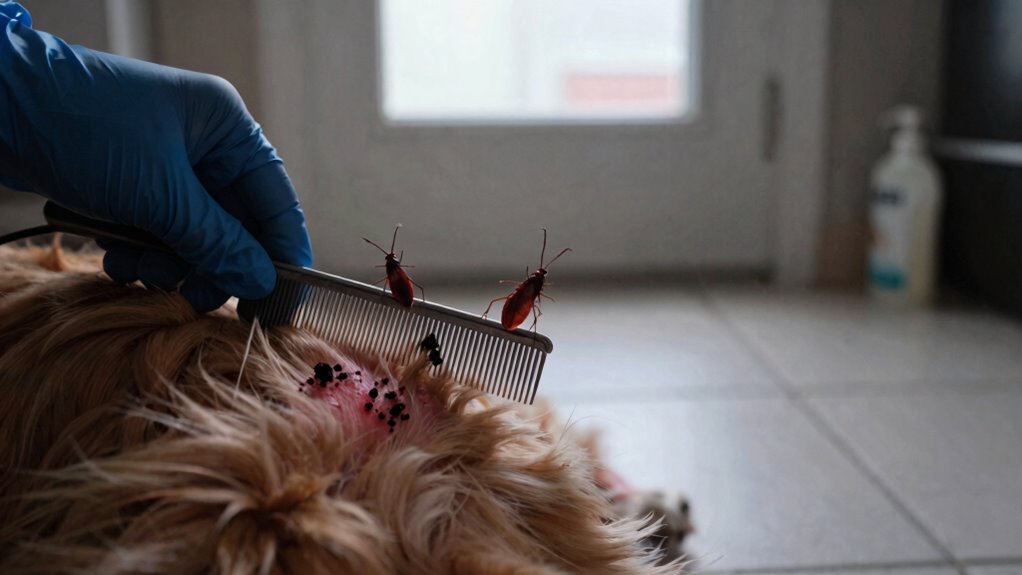
Ticks latch on for days, while fleas settle in permanently. That means each pest needs its own removal approach.
For ticks, use fine-tipped tweezers to grasp near the mouthparts. Pull straight out steadily without twisting or squeezing the body.
This reduces the chance of disease transmission. For fleas, a flea comb dipped in soapy water works well to drown captured pests.
Chemical control options like topical spot-ons or oral medications kill fleas quickly. Natural remedies, such as diatomaceous earth or neem oil sprays, offer a gentler choice for sensitive pets.
Don’t expect results from garlic or brewer’s yeast. Those are mostly myth and won’t solve a flea infestation.
Stick with proven methods to keep your pet comfortable and healthy. Remove any attached pest immediately for best results.
How to Prevent Both Pests Year-Round
Prevention is a year-round commitment, not just a summer hobby. Year-round protection is key because fleas thrive indoors in heated homes, and ticks emerge when temperatures rise above 40°F.
Prevention is a year-round commitment, not just a summer hobby.
Seasonal treatment alone leaves gaps in your defense. To keep both pests away, follow these four simple steps.
First, apply monthly topical or oral preventives like Bravecto or Frontline every 30 days, even in winter. This ensures continuous flea and tick control for your dog or cat.
Second, vacuum carpets and wash pet bedding weekly using hot water. This kills flea eggs and larvae that hide deep in fibers.
Third, maintain your yard by mowing grass short and removing leaf litter. Ticks often lurk in tall grass and debris piles.
Fourth, check pets after walks with a fine-toothed comb. Focus on areas behind the ears and between toes where pests hide.
Regular pest prevention keeps your home and pets safe all year. Follow these steps for a flea and tick free home.
Frequently Asked Questions
Can Ticks Live in Human Hair?
Yes, ticks can live in human hair, but they don’t stay long. Their natural habitat is grass or shrubs, where they wait for a host to pass by.
A human scalp offers warmth and blood, so a tick will attach there, especially along the hairline. It’s not their first choice, though, since they prefer furrier animals like dogs or deer.
Finding a tick in your hair feels gross, but a quick check and removal with fine tipped tweezers solves it. For complete protection, consider a professional pest control service or use a tick repellent spray designed for personal use.
If you’re looking for the best tick prevention products, look for a yard treatment that kills ticks on contact. These home pest control solutions can keep your property free from tick infestations all season long.
Can Fleas Live on Humans Without Pets?
Fleas can absolutely live on humans without pets, and human infestation is possible, though rare. Fleas prefer furry hosts, but they won’t pass up a warm-blooded meal, so they will bite you and cause itchy welts.
They aren’t picky eaters, but they aren’t loyal either. Without a dog or cat around, fleas might hop on you for a quick blood meal, then jump right off.
You are more of a snack than a home, so they won’t set up permanent residence on your skin or hair. For lasting flea control in a pet-free home, you need to target their hiding spots like carpets, bedding, and baseboards.
Investing in a quality indoor flea spray or a professional-grade fogger can break the flea life cycle and stop repeat bites. If you’re dealing with persistent flea bites, consider a topical repellent for your ankles and legs as a first line of defense.
For severe infestations, a pest control service can treat your living space and eliminate flea eggs and larvae at the source. Buy a trusted flea killer with insect growth regulators (IGRs) to prevent future hatchings and ensure your home stays bite-free.
Do Ticks or Fleas Pose Higher Risk to Cats?
Ticks pose the higher risk to cats, especially due to a cat only parasite like cytauxzoonosis that has no vaccine. This deadly disease makes tick prevention a top priority for cat owners, even for indoor cats.
Indoor cat exposure to ticks is lower but not zero, since ticks can hitch rides indoors on humans or dogs. Fleas cause itchy misery and tapeworms, but ticks bring graver threats to your cat’s health.
For cats, the verdict is clear: ticks are the bigger danger. Your best bet is to use a vet approved tick preventive year round.
Flea control matters too, but tick protection is non negotiable for any cat owner. If you want the best pest control for cats, look for a product that covers both ticks and fleas.
A smart purchase includes a spot on treatment or oral medication that kills ticks fast. Always check the label for active ingredients like fipronil or fluralaner to ensure strong protection.
How Can I Tell if My Pet Has Fleas vs. Ticks?
Check for movement on your pet’s coat to tell fleas from ticks. Fleas dart and jump quickly, while ticks stay latched on like tiny speed bumps.
Look for flea dirt, which are dark specks that turn red on a wet paper towel. Ticks appear as grayish lumps attached to the skin.
Pay attention to your pet’s behavior. Scratching often signals fleas, while head shaking or ear rubbing points to ticks.
Feel for the pests with your fingers. A tick feels like a new scab, but a flea feels like moving dirt that scurries away.
The bottom line is simple. If you spot one crawling fast, it is likely a flea, and you’ll need a fast flea treatment like a topical or oral preventive.
If you find one stuck on and not budging, it is a tick, and you should use tweezers or a tick removal tool immediately. For ongoing pest control, consider buying a flea and tick collar or a monthly spot on product.
Act fast to protect your pet from diseases like Lyme or flea allergy dermatitis. Check your pet daily, especially after walks, and choose a trusted pest control product from our store.
Are There Natural Remedies to Repel Ticks and Fleas?
Natural remedies can help repel ticks and fleas, but they aren’t a standalone solution. Essential oils like cedarwood, peppermint, or lemongrass may deter pests when diluted properly. Always check with your vet first before applying any natural tick control at home.
Diatomaceous earth is a fine powder made from fossilized algae that dehydrates fleas on contact. Lightly sprinkle food grade diatomaceous earth on carpets, let it sit for 48 hours, then vacuum thoroughly.
These methods work best as a supplemental flea treatment, not a replacement for proven preventatives. For the best pest protection, combine natural repellents with vet approved flea and tick products.
This integrated approach helps you buy smart: use natural deterrents alongside oral or topical treatments for complete yard and pet coverage.


