
Bed bugs vs. carpet beetles—it’s a common mix-up that can cost you time, money, and sleep. Bed bugs leave itchy, red bites in neat lines and hide in mattress seams, while carpet beetles cause ragged holes in wool sweaters and rugs.
Knowing the difference between these two pests is the first step to solving the right problem. Bites suggest bed bugs; fabric damage points to carpet beetles, and that distinction alone can save you a thousand-dollar headache.
This guide breaks down the key signs of each infestation, so you can act fast and choose the right treatment. Keep reading for the exact details on which pest you’re up against and how to handle it.
At A Glance
- Bed bugs bite; carpet beetles don’t—their hairs cause allergic rashes.
- Bed bugs hide in mattress seams; carpet beetles lurk near baseboards, lint, and pet hair.
- Bed bug bites form linear welts; carpet beetle rash appears as scattered, uneven red patches.
- Carpet beetles damage wool, silk, and upholstery; bed bugs never damage fabric.
- Look for dark fecal spots for bed bugs; bristly shed skins signal carpet beetles.
What Do Bed Bugs and Carpet Beetles Look Like?
Bed bugs and carpet beetles look very different, which is helpful when you are trying to identify a pest in your home. Bed bugs are flat, reddish-brown, and oval shaped like an apple seed, measuring about 5 to 7 mm long.
Their nymphs are nearly transparent and almost invisible before feeding, but they turn reddish after a blood meal. Adult carpet beetles are round, black or brown with yellow scales, and they can fly, but bed bugs cannot.
Carpet beetle larvae look like tiny, hairy maggots with tan or black ridges, while bed bug nymphs remain smooth. If you find a bug that flies, it is likely a beetle; if it is tiny and see through, it is probably a bed bug.
For professional pest control, focus on the larvae stage for carpet beetles, as they cause fabric damage. If you suspect a bed bug infestation, immediate heat treatment or chemical spray is recommended for effective elimination, and using a waterproof mattress encasement with a quality zipper seal can also trap bugs already on the mattress and prevent new ones from entering.
Where Do These Pests Hide in Your Home?
In the game of pest control hide and seek, bed bugs and carpet beetles play by completely different rules. This makes it much easier to know exactly where to inspect for an infestation.
Bed bugs are creatures of habit that stay close to their human food source. They tuck themselves into mattress seams, bed frames, and headboards, leaving dark fecal spots as clear signs of their presence.
Carpet beetles are scavengers that feast on natural fibers like wool and cotton. They gather where lint, dust, and pet hair accumulate under heavy furniture, along baseboards, or near window sill cracks.
Adult carpet beetles have wings and you often spot them crawling toward light fixtures. Their larvae prefer undisturbed, dark spaces like closets or stored woolens for hiding.
If you find fabric damage rather than skin bites, check for tiny hairy casings near pet hair traps. That damage points to carpet beetles, not bed bugs, saving you time and treatment money. For severe infestations, residual barrier sprays can provide long-lasting protection around baseboards and entry points.
What Do Bed Bug Bites and Carpet Beetle Rashes Look Like?
Bed bug bites appear as raised, red welts in a line or zigzag pattern. Carpet beetle rashes look like scattered, uneven patches of irritated skin.
Both cause itching, but bed bug bites produce a distinct, burning itch that peaks a few days after the bite. Carpet beetle irritation results from tiny, hairy larvae fragments, not from an actual bite.
This means the skin response is a dull, diffuse rash rather than a series of precise marks. If you suspect an infestation, consider contacting a pest control professional for accurate identification and treatment. For ongoing monitoring, non-toxic glue traps can help detect bed bugs without using harmful chemicals.
Appearance of Bites
| Feature | Bed Bug Bites | Carpet Beetle Rash |
|---|---|---|
| Shape | Raised welts, often in rows | Flat, irregular red patches |
| Pattern | Clusters or lines (breakfast, lunch, dinner) | Scattered, no clear grouping |
| Center | Often a dark red dot at bite site | Uniform redness, no dot |
| Timing | Appear overnight, after feeding | Gradual onset, often worse after handling fabrics |
| Location | Typically exposed skin (arms, face, neck) | Anywhere skin contacts infested items |
Bed bug bites form raised welts in rows or clusters, while carpet beetle rash shows flat, irregular red patches without grouping. A dark red dot often marks the center of bed bug bites, but carpet beetle rash has uniform redness.
Bites from bed bugs appear overnight after feeding, typically on exposed skin like arms and neck. Carpet beetle rash develops gradually and worsens after handling infested fabrics or carpets.
To identify an infestation, check mattress seams and headboards for bed bugs, or inspect wool rugs and closets for carpet beetle larvae. Professional pest control treatment is recommended for confirmed bed bug cases to stop bites and prevent spread. Natural powders with pumice and plant oils can kill carpet beetles without harsh chemicals, making them safer for homes with pets and kids.
Itchiness and Irritation
Itchiness and irritation are your body’s way of sounding an alarm, but bed bug bites and carpet beetle rashes look and act very differently.
Bed bug bites appear as red, raised welts in lines or clusters, usually on arms or legs.
They itch intensely because the bug injects a numbing agent while feeding.
Carpet beetle rashes, on the other hand, come from tiny larvae hairs that become airborne allergens.
These bristles drift through vents or off fabrics, causing red, bumpy patches anywhere, not just on exposed skin.
The weird part is that a psychosomatic itch can strike even after seeing a single pest.
You might scratch more from stress than from any real reaction, so check the patterns closely.
Clusters mean bed bugs, while scattered, random rashes suggest carpet beetles are the problem.
This is your skin’s detective work, not just drama.
For effective pest control, inspect mattress seams and baseboards for bed bugs, and vacuum frequently to remove carpet beetle larvae.
If you suspect carpet beetles, focus on cleaning upholstery and air ducts.
For bed bugs, consider professional pest removal services to stop infestations fast and prevent future bites.
Additionally, using sticky glue traps can help monitor for carpet beetles early without chemicals.
Distinguishing Skin Reactions
Look closely, because your skin is holding a press conference and giving out very different bulletins depending on the pest.
Bed bug bites come from actual feeding, leaving raised, red welts often in neat lines or zigzag clusters on exposed skin like your arms or neck.
These bites itch intensely, but this is a reaction to the bug’s saliva, not an allergy.
Carpet beetle rashes, by contrast, are a pure allergic response from microscopic, bristly hairs drifting onto your skin.
Larvae don’t bite, so the rash looks like a scattered, patchy irritation with no pattern and no blood meals involved.
It appears more like an angry, splotchy redness rather than tidy bug bites.
The bottom line for effective pest control: neat lines point to bed bugs; a messy, non-bite rash signals carpet beetles.
To target bed bugs directly, choose a spray with residual protection up to 16 weeks for lasting control on mattresses and baseboards.
Don’t treat one like the other, or you’ll waste time and money on the wrong treatment.
How to Spot the Signs of an Infestation
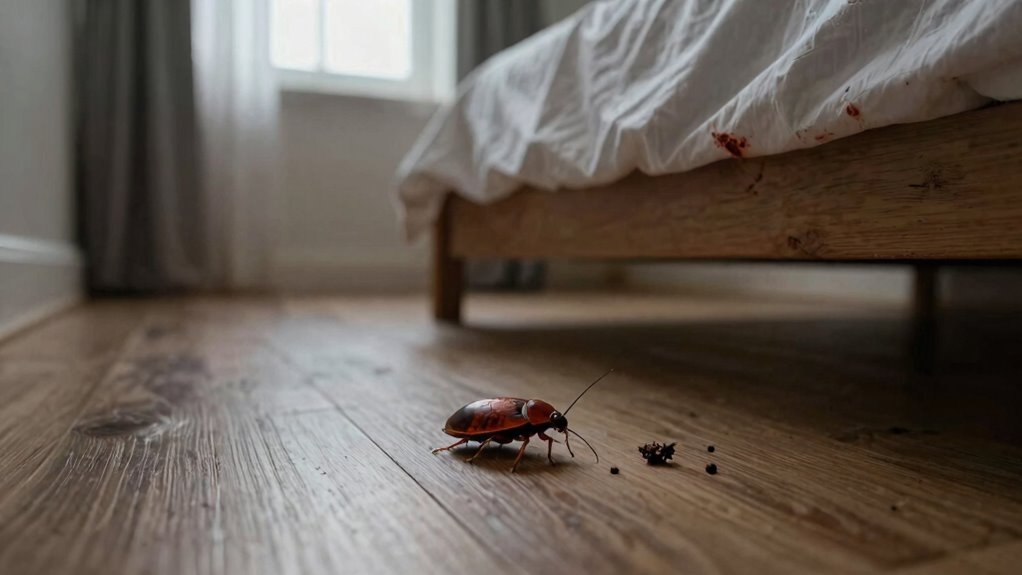
Spotting a pest infestation early often depends on knowing exactly what you’re looking for. In this case, the two culprits couldn’t be more different.
For bed bug detection, focus on sleeping areas and mattress seams. You might find rusty fecal spots, tiny bloodstains on sheets, or a subtle musty odor.
Shed skins and tiny eggs hide in mattress seams, like a microscopic crime scene. A thorough pest control inspection should also check behind headboards.
A carpet beetles guide looks primarily at fabrics and natural fibers. Irregular holes in wool sweaters, rugs, or upholstery signal larval feeding damage.
Bristly shed skins often collect near baseboards or closets. Adult carpet beetles gather at windows, attracted to light, making them easy to spot.
Remember, carpet beetles don’t bite, but their hairs can cause red itchy welts. Professional pest treatment for carpet beetles focuses on deep cleaning and sealing cracks.
Spotting these clues correctly saves weeks of misguided treatment. For a chemical-free option, food-grade diatomaceous earth kills bed bugs mechanically by damaging their exoskeletons within 48 hours. Early detection is your best tool for effective pest removal.
Which Pest Causes Damage to Clothes and Furniture?
Carpet beetles are the culprits behind damaged clothes and furniture, not bed bugs. Their larval feeding directly causes fabric damage, chewing irregular holes through wool, silk, and upholstery.
Bed bugs, by contrast, only bite humans and never touch textiles. That means no fabric holes from them, just potential blood stains from their feeding sessions.
| Pest | Damage to Clothes & Furniture |
|---|---|
| Bed Bugs | None, no fabric damage, only blood stains from bites |
| Carpet Beetles | Holes, thinning fibers, and shredded edges from larvae |
| Bed Bug Larvae | Not applicable, nymphs seek blood, not fabric |
| Carpet Beetle Larvae | Feed on natural fibers, leaving ragged, uneven damage |
| Adult Carpet Beetles | Minimal, pollen eaters, but may land near fabrics |
Look for shed, bristly larval skins near closets or baseboards. If you see holes but zero bite marks, it’s carpet beetles, plain and simple.
That fuzzy culprit is munching your favorite sweater while bed bugs just snack on you. For targeted pest control, inspect wool storage and vacuum under sofas regularly.
Hiring a professional pest control service can confirm an infestation and treat larval hotspots. Early carpet beetle removal prevents costly furniture repairs and wardrobe replacement.
For comprehensive eradication, use a spray that kills all beetle life stages to break the reproductive cycle and stop larvae from chewing through more fabrics.
The Big Difference: Treatment vs. Infestation Removal
Mistaking carpet beetles for bed bugs can lead to wasted time and money, a costly error in pest control. For bed bugs, the fix is systematic, using heat treatment or targeted sprays that often costs hundreds to thousands of dollars. Portable heat treatment units cost between $200 and $500, making them a more affordable option for targeted pest elimination. Carpet beetles, however, demand thorough cleaning, vacuuming, and sealing cracks instead of chemical warfare on your mattress. If you want professional pest removal for bed bugs, call an exterminator immediately for a full inspection.
For carpet beetle infestations, focus on deep cleaning and removing lint, hair, and organic debris. This DIY approach saves money and prevents future re-infestation without harsh insecticides.
Systematic Pest Removal
Effective pest removal demands a methodical approach, not guesswork. Systematic pest control, often handled by a professional exterminator, starts with accurate identification.
Mixing up bed bugs and carpet beetles is a costly mistake. Bed bugs require targeted heat or steam treatments in sleeping areas, repeated over weeks to kill hidden eggs.
Carpet beetles demand deep vacuuming, sealing cracks, and removing lint or pet hair from baseboards. Getting it wrong means wasted money and ongoing fabric damage.
A pro first inspects every seam, vent, and closet, building a treatment plan around the specific pest. They don’t just spray; they treat the source.
That’s why hiring trained pest control technicians, despite the upfront cost, beats amateur guesswork. Bottom line: identify right, treat smart, or pay twice.
Targeted Fabric Protection
Targeted fabric protection is about treating the bug, not the fabric, unless the bug is the carpet beetle. Bed bugs do not eat clothes, so standard insecticide near your bedframe works fine.
Carpet beetles snack on natural fibers like wool, silk, and cashmere. That means you must protect the fabric itself.
Store vulnerable items in sealed garment bags, which cost $15 to $30 for a pack. For active infestations, use a permethrin-based fabric treatment labeled for upholstery.
A single spray can costs about $12. Pay extra attention to yarn selection in rugs.
Synthetic blends resist damage better than pure wool. Carpet beetles think your sweater is a buffet.
Buy synthetic fabrics for high risk areas. Treat existing pieces and vacuum weekly.
This stops the larvae, not just the adults.
One effective option is to use cotton canvas garment bags which allow air circulation while blocking pests.
How to Get Rid of Bed Bugs
Since bed bugs feed exclusively on blood and hide near where you sleep, getting rid of them means turning your bedroom into a war zone. But it should be a clean, methodical one.
Start by stripping all bedding, washing it in hot water, and drying on high heat. Vacuum every crevice of your mattress, bed frame, and baseboards. Then seal the bag and toss it outside. For prevention, encase your mattress and box spring in zippered covers. Inspect secondhand furniture like a detective on a sting.
Here is the hard truth. DIY pest control often fails.
DIY pest control often fails. Eggs hide in places you’d never guess.
Eggs are tiny and hide in places you would never guess. That is where professional bed bug extermination comes in.
Heat treatments, which cost around $1,000 to $2,500 per room, bake the bugs dead in a single day. If you attempt a DIY approach, a steamer must reach at least 180°F to kill both bugs and eggs on contact. Chemical sprays may follow for stubborn stragglers.
Bottom line. If you see more than a few bugs, call the pros.
Your sanity is worth it. Do not half bake this treatment.
How to Get Rid of Carpet Beetles

For carpet beetles, the war looks different. You fix natural fiber damage, but the real trick is larval habitat control.
Ignore bed bug paranoia. Focus on the pantry of lint, pet hair, and dead insects they feast on.
Victory starts with a brutal vacuum. Suck up every spec under baseboards and radiators.
Then steam clean carpets and upholstery at 140°F. Wash all natural fiber clothing in hot water or discard what is beyond repair.
For tough infestations, use a residual insecticide like deltamethrin on baseboards and in closets. A ten dollar can of Novacide works well, killing both larvae and adults for months.
Remove potential food sources. Without them, carpet beetles starve.
Simple, dusty, but effective. Bottom line: clean first, spray second.
Consider supplementing your efforts with plant-based oil sprays or cedar sachets, which are safe for fabrics and disrupt the beetle life cycle without harsh chemicals.
Frequently Asked Questions
Can Bed Bugs or Carpet Beetles Spread Diseases?
Neither bed bugs nor carpet beetles are known disease vectors, so they do not transmit illnesses like mosquitoes do. That is the good news for anyone dealing with these household pests.
Bed bugs cause itchy bites, but the real hassle is the stress and sleeplessness they bring. Carpet beetles can trigger allergic reactions from their shed hairs or larvae, making them potential allergen triggers for sensitive individuals.
So no diseases, just annoyance and irritation. The bottom line is both pests are more nuisance than health threat, but carpet beetles might spark skin or respiratory issues.
If you spot signs like rusty stains on sheets or shed skins in closets, professional pest control services can help. For DIY options, look for bed bug sprays and carpet beetle treatments that target larvae and adults effectively.
Treat these pests seriously without panicking. A strategic approach with the right insecticides or natural repellents keeps your home safe and your family comfortable.
Do Carpet Beetles Bite Humans Like Bed Bugs?
No, carpet beetles do not bite humans like bed bugs do. Bed bug bites are actual feeding punctures, leaving itchy welts.
Carpet beetles only cause a carpet beetle rash from their shed hairs touching skin. This is an allergic reaction, not a bite.
So if you see red marks on your skin, it is a rash, not bites. Think of it this way: bed bugs want your blood.
Carpet beetles just want your sweater. They are fabric fans, not vampires.
For effective pest control treatment, start by inspecting wool, silk, and stored clothing. Use a strong vacuum and wash infested fabrics to remove larvae hairs.
If you suspect a carpet beetle infestation, consider using an insecticide spray for carpets and closets. A professional pest control service can also handle severe cases.
Check for larvae skins near baseboards and in dark corners. That is the real culprit behind your skin irritation, not a bite mark.
Can You Have Both a Bed Bug and Carpet Beetle Infestation?
Yes, you can absolutely have both a bed bug and carpet beetle infestation at the same time, though it is not the most common scenario. Homes with heavy clutter, pet hair, and fabric debris create a perfect buffet for carpet beetle larvae while bed bugs quietly colonize your mattress and box spring.
To spot both pests early, check mattress seams for tiny blood spots and rusty stains, then scan baseboards and closet corners for shed larval skins and fuzzy, bristly casings. Carpet beetle larvae look like tiny brown caterpillars, while bed bug signs include dark fecal dots and live bugs in crevices.
For a combined control strategy, you need a dual approach that targets each pest’s distinct hiding spots and life cycle. Start with a residual bed bug spray applied directly to mattress seams, bed frames, and headboard cracks, then follow up with a deep vacuum of carpets, rugs, and upholstery to remove beetle larvae and their food source.
Washing all bedding, curtains, and clothing in hot water above 120°F kills both bed bugs and carpet beetle eggs, but you must repeat this weekly for at least two months. Use a steam cleaner on baseboards and under furniture edges, because steam at 200°F eliminates bed bugs on contact and loosens beetle debris for easy vacuuming.
You cannot rely on a single insecticide for both, as bed bugs require a targeted residual chemical while carpet beetles often need a growth regulator to stop larvae from maturing. Look for products labeled for both pests, such as a broad-spectrum spray with pyrethrins, but always check the label for specific pest names before buying.
If you want a smart purchase, choose an integrated pest management kit that includes a bed bug spray, a carpet beetle powder, and a UV detection light to find hidden activity. These kits often save money compared to buying separately, but they only work if you follow the application intervals exactly as directed.
The real game changer is lowering humidity below 50% and decluttering your home, since both pests thrive in undisturbed fibers and dark, sheltered zones. Vacuum twice a week, empty the bag outside immediately, and seal cracks along baseboards to cut off beetle larvae’s travel routes while limiting bed bug harborages.
Treating one pest while ignoring the other will lead to a frustrating cycle, because their life cycles do not sync and one can reinfest the areas you just cleaned. For that reason, your best bet is to call a licensed pest control pro for a dual-action plan that includes a follow-up inspection after 14 days.
A professional will rotate chemicals to prevent resistance, apply insect growth regulators for beetles, and use a thorough crack-and-crevice treatment for bed bugs. Expect two to three visits over six weeks, and ask for a written guarantee that covers both pest types in the warranty.
In short, yes, you can manage both infestations simultaneously, but you need to treat them as separate problems with overlapping cleanup steps. Buy a dual-target product, commit to a strict weekly cleaning schedule, and do not skip the second round of treatment, or you will see a resurgence within a month.
Are Bed Bugs or Carpet Beetles More Common in Homes?
Carpet beetles are far more common in homes than bed bugs. They thrive in any house with natural fibers, lint, or pet hair.
Bed bugs require a very specific, human centered habitat. It’s a numbers game: carpet beetles exploit countless food sources, whereas bed bugs need you.
You can spot seasonal patterns. Carpet beetles swarm near windows in spring, and coastal warmth boosts both pests.
So except if you’re a nightly blood donor, it’s probably a beetle. For effective pest control, start by vacuuming carpets and washing linens with hot water.
To prevent infestations, use a quality insecticide spray for beetles and inspect secondhand furniture for bed bugs. If you see small shells or shed skins, that’s a clear sign of carpet beetles.
For bed bug detection, look for rust colored stains on your mattress. Smart buyers choose mattress encasements and monitor traps to catch early activity.
How Long Do Bed Bugs and Carpet Beetles Live?
Adult bed bugs live five to six months on average, but they can survive a full year without feeding when conditions are right. That makes them incredibly stubborn roommates, and it’s why homeowners often need professional-grade bed bug sprays or heat treatments to break the cycle.
Nymph development takes anywhere from five weeks to four months, depending on how often they get a blood meal. For pest control buyers, this means early detection and residual insecticides are your best defense before the population explodes.
Adult carpet beetles, on the other hand, live only two to six weeks, but that short life is packed with mating and egg-laying. Their larvae are the real fabric destroyers, thriving on wool, silk, and even pet hair for months or years before pupating.
So when comparing bed bugs vs carpet beetles, adult lifespan favors bed bugs, but carpet beetle nymphs drag out the damage timeline much longer. If you’re shopping for pest control products, target carpet beetle larvae with growth regulators, and use mattress encasements plus interceptors for bed bugs.
For a smart purchase, always check the label for residual activity and indoor-safe formulas. Whether you need a bed bug killer or a carpet beetle aerosol, focus on products that kill both larvae and adults to avoid repeat infestations.


