
Finding tiny bugs in your home is unsettling, and telling them apart is the first step to getting rid of them. Bed bugs crawl slowly, looking like rusty apple seeds, while fleas jump like dark torpedoes and prefer pets. This guide breaks down the key differences—from where they hide to how their bites look—so you can act fast. You’ll get a clear comparison of signs, causes, and the most effective treatments for each pest. Ready to reclaim your space? The product roundup below has the top tools for both bed bugs and fleas, saving you guesswork and money.
At A Glance
- Bed bugs are apple-seed shaped, 4-5 mm, and crawl; fleas are flat side-to-side and jump.
- Flea bites are small red dots with halos below the knee; bed bug bites are raised welts in lines.
- Fleas hide in carpets and pet bedding; bed bugs hide in mattress seams and headboards.
- Fleas transmit typhus and tapeworms; bed bugs rarely spread disease but cause anxiety.
- Use diatomaceous earth for both pests; heat over 120°F kills bed bugs effectively.
Bed Bugs vs Fleas: How to Tell Them Apart
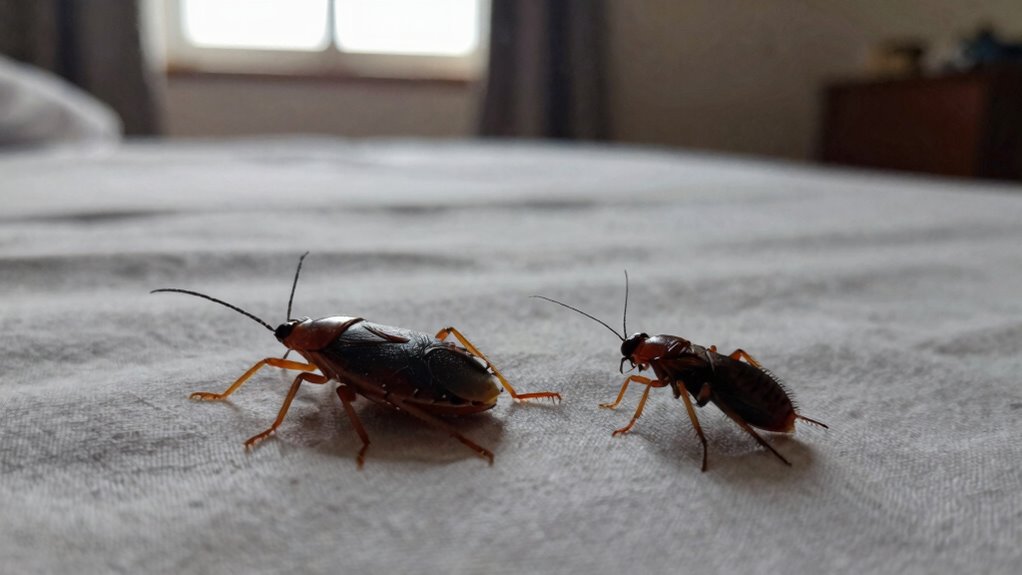
So, how do you tell a bed bug from a flea without a biology degree? Look at their shape and moves. Bed bugs are oval and flat, like an apple seed, and they crawl.
Their bed bug life cycle involves slow growth through five nymph stages, each needing a blood meal, but they never jump. Fleas are skinny side to side, dark, and built for flea jumping ability. They can leap 100 times their body length.
A flea’s jump is instant, whereas a bed bug just scurries. Size helps too: fleas are smaller, 1.5 to 3.3 mm, versus a bed bug’s 4 to 5 mm.
If it hops, it’s a flea. If it crawls and looks like a tiny, rusty coin, it’s a bed bug.
Simple, no degree required. For professional pest control, identifying the pest is your first step to choosing the right treatment products or calling an exterminator.
Using pesticide-free traps can provide a safe way to monitor for these pests without introducing chemicals into your home.
Where Do Bed Bugs and Fleas Hide in Your Home?
Bed bugs prefer to hide in cracks and crevices near sleeping areas. Think mattress seams, box springs, behind headboards, and nightstands. Their flat bodies make them master stowaways that require professional pest control to eliminate.
Fleas, on the other hand, tend to lurk in carpet fibers, pet bedding, and upholstery. Strong jumping legs let them make quick escapes from your vacuum or flea treatments.
So bed bugs camp out by your bed, waiting for a blood meal at night.
Fleas are more like tiny, dark brown trampoline artists living in your pet’s favorite napping spots.
For effective home pest removal, inspect both sleeping areas and pet zones closely. You can buy six-sided mattress encasements with bug-proof zippers and flea sprays to target these hidden hotspots yourself.
Common Hiding Spots
Bed bugs prefer to hide within eight feet of your bed, so focus your inspection on seams, tufts, and folds. These tiny pests are masters of staying out of sight in tight, shadowy spaces. That means checking mattress edges, box springs, and even the headboard frame for signs of activity. Fleas tend to settle in low-traffic carpet fibers where they won’t be disturbed by foot traffic. They avoid open, exposed floor areas, so target the edges of rugs and under furniture for treatment. When you’re ready for pest control services, start by inspecting the entire bed perimeter for bed bug treatments. Vacuum rugs thoroughly, especially along baseboards, to catch flea eggs and larvae before they spread. If you skip one hidden corner, you could end up dealing with a full reinfestation. Acting early with targeted solutions helps you avoid repeat visits from these unwanted guests. For safe monitoring around children and pets, consider using traps made from non-toxic materials that require no chemical sprays. A thorough sweep of the sleeping area and floor coverings is your best defense against both pests. Keep a flashlight handy and move slowly through each zone to ensure every potential hiding spot gets covered.
Pet Bedding and Carpets
From the bed perimeter, it’s just a short crawl over to the place your pet spends half its day: their bedding and favorite carpet spots. This is prime real estate for a flea infestation or bed bug problem, not just lounging.
Both pests love these soft, warm surfaces, but they hide differently. Tucked into seams and folds, bed bugs slip into the stitching of pet bedding like tiny rusty hitchhikers avoiding the light.
Buried in carpet fibers, fleas lurk deep in the pile, waiting for a passing paw or ankle. Flea eggs drop off pets and tumble into carpet, hatching into larvae that hide in the dark.
Look for small rust-colored spots on light bedding, which are bed bug leftovers after a meal. If your pet scratches a specific carpet spot, that’s a red flag for fleas, not bed bugs.
Bottom line: check the seams, vacuum often, and don’t let your pet’s bedding become a bug motel. Use a targeted pest control spray and wash bedding weekly to eliminate hidden pests. Diatomaceous earth treatments can kill fleas and bed bugs by dehydrating them within 48 hours, working best on dry areas like carpets and pet bedding.
How to Detect Bed Bugs vs Fleas Right Now
A sudden, mysterious itch is rarely a welcome surprise. To detect the culprit right now, focus on where they hide.
Start with bed bug sniffing by literally searching mattress seams and crevices for tiny, rust colored stains or shed skins. These apple seed shaped pests cluster, unlike fleas.
For fleas, employ flea combing on your pet. A fine toothed comb dragged through fur, especially over the rump, yields tiny, dark, jumping specks.
Fleas are laterally compressed, built to leap. Check pet bedding and carpets, too.
Your verdict is simple: bed bugs equal stationary stains in hiding spots. Fleas equal moving specks on a comb.
Grab a flashlight, a magnifying glass, and a flea comb. Bottom line: methodical searching beats guessing every time.
Consider applying diatomaceous earth to cracks and crevices after the search to kill remaining bed bugs and fleas through dehydration.
Bed Bug vs Flea Bites: What Do They Look and Feel Like?
Bed bug bites show up as raised, red welts in a straight line, usually on exposed arms or shoulders.
Flea bites appear as smaller red dots with a pale halo, and they cluster mostly below the knee since fleas jump up from the floor.
Bed bug reactions are delayed, so swelling can take hours or even a day to appear, while flea bites trigger near-immediate itching.
For location clues, check your mattress seams and headboard for bed bugs, but inspect pet bedding and carpets for flea activity.
Scratching either type can lead to secondary infection, but flea bites are more likely to get scratched raw due to that instant, intense itch.
To choose the right pest control treatment, track the bite pattern and timing: bed bugs follow a linear trail at night, while fleas scatter lower on the body and react fast.
If you need professional pest removal services, focus on the source area first, since bed bug extermination targets sleeping spots and flea control targets pet zones and rugs.
Your first step for bed bug relief is laundering linens and vacuuming crevices, but for flea prevention, wash pets and treat the yard before indoor sprays.
Spotting the difference early saves you from buying the wrong insecticide, so compare the bite shape and the speed of the itch.
When in doubt, call a local exterminator for an inspection, and mention whether the welts line up or stay below the knee to speed up the diagnosis.
Which Bug Poses a Bigger Health Risk?

Comparing the health risks of bed bugs versus fleas is like choosing between a paper cut and a splinter.
Both are annoying, but fleas draw more blood and carry real germs.
Fleas are the heavier hitters thanks to their long history as disease vectors.
They can transmit typhus and tapeworms, and their bites often trigger severe allergic reactions in pets.
This means you may need costly vet visits and pest control treatments for flea infestations.
Bed bugs, on the other hand, rarely transmit disease.
Their main threat is the psychological impact, causing insomnia and anxiety that lingers long after extermination.
Think of it this way: fleas bring a first-aid kit of actual germs, whereas bed bugs just mess with your head.
Neither is as dangerous as a mosquito, but if you are choosing which to avoid, fleas pack more literal bite.
For homeowners, the bottom line is clear: fleas pose the bigger physical health risk, bed bugs the bigger mental one.
To naturally repel these pests outdoors, consider using citronella essential oil candles that are safe around families and pets.
Which Pets and Homes Get Infested Most Often?
That shift from which bug is worse to where they actually show up is where things get practical. Fleas are pet specialists, infesting cats and dogs far more often than bed bugs ever will.
Bed bugs, by contrast, are home invaders who don’t care if you have pets at all. The difference drastically affects your wallet. Fleas thrive on furry hosts, whereas bed bugs stick to furniture and mattresses.
The difference drastically affects your wallet: fleas thrive on furry hosts, while bed bugs stick to furniture and mattresses.
Flea infestations are common in homes with pets, especially cats and young dogs. Bed bug problems hit any household, regardless of pet ownership. Treating a flea problem often requires a multi-surface approach, as sprays with insect growth regulators can prevent reinfestation for up to seven months.
Treating fleas often requires vet visits, making pet health insurance valuable. Bed bug extermination is expensive, with pest control costs averaging $300 to $900 per room.
Bottom line: If you own a pet, your risk of fleas is high. Pet insurance helps with vet bills, but pest control costs for bed bugs can sneak up on anyone.
Know your enemy and consider a home pest inspection for early detection.
When Are Bed Bugs and Fleas Most Active?
Why does the timing of bed bugs and fleas matter? It shapes your entire pest control strategy.
Bed bugs are nighttime ninjas, active while you sleep. They feed mostly between midnight and dawn for 3 to 10 minutes on exposed skin.
Their bed bug lifespan of four to six months keeps them stubbornly hidden in mattress seams and baseboards. They simply wait for darkness to strike.
Fleas are more opportunistic and will jump onto a passing pet any time of day. Their flea jump height can reach up to 150 times their own body length.
This lets them spring from carpets to ankles in milliseconds. Seasonal peaks tell the tale clearly.
Fleas thrive from July through October, especially in humid weather. Bed bug complaints spike late summer, with August being the worst month.
Winter slows both pests down significantly. However, bed bugs just hibernate while fleas seek warm indoor hosts.
Know the schedule to pick your battle. Effective home pest control depends on timing your treatments right.
For travelers, carrying a TSA-approved travel spray ensures you can inspect and treat luggage immediately upon arrival to prevent bringing either pest home.
Best Treatments for Bed Bugs and Fleas

Knowing the schedule is half the battle. Effective treatment requires a one two punch: killing active bugs and managing resistant populations.
Heat treatments over 120°F for 90 minutes kill all life stages of bed bugs. They are chemical free and leave no residue, which is great for sensitive homes. The cons are high cost, usually $1,000 to $2,500 per room, and the need for professional gear.
Steamers work on both pests at 212°F, penetrating mattress seams for spot treatment. They are effective but messy and time consuming for large areas. Effective steamers like the YIKEDA Handheld Steam Cleaner quickly reach 221°F to kill bed bugs and their eggs without toxic fumes.
Insecticide resistance management is essential for long term pest control. Rotate between pyrethroids and neonicotinoids for bed bugs, and use fipronil or imidacloprid for flea removal.
Vacuuming removes 60% of flea eggs and adult bed bugs daily. Immediately throw away the bag, or freeze it, to stop re infestation.
Urban public health resources like NYC free inspections or pet clinics offer affordable options. But availability varies, so check locally for pest treatment help.
Bottom line: match the method to the pest hiding spot for the best results.
Preventing Bed Bugs and Fleas From Returning
IGRs are a smart, targeted pest control solution that disrupts the bug’s life cycle, so they never get a chance to breed.
For bed bug prevention, check every seam, zipper, and crevice on secondhand sofas or mattresses before bringing them inside.
A thorough flea treatment plan also includes washing pet bedding in hot water weekly and treating your yard if you have pets.
Regular vacuuming with a HEPA filter removes eggs and adults from carpets, baseboards, and upholstery, but don’t forget to seal and dispose of the bag right after.
When you’re ready to buy pest control products, look for IGR sprays with methoprene or pyriproxyfen, as these are proven flea inhibitors.
For a long term home defense, combine those IGRs with a residual insecticide in cracks and along floor edges, and repeat applications every few weeks.
Check your furniture delivery areas, like couches and box springs, with a flashlight every couple of days during the first month.
If you spot any sign of live bugs, use a vacuum attachment and follow up with a targeted spot treatment to stop the infestation from regaining traction.
Finally, create a barrier by using mattress and box spring encasements, which trap any remaining pests and make future inspections easier.
Stay consistent for at least six weeks, because that’s how long it takes for new eggs to hatch and for IGRs to fully break the cycle.
With these proactive steps, you’re not just cleaning, you’re building a permanent no vacancy policy for bed bugs and fleas.
Keep your guard up, and you’ll enjoy a bite free home without ever needing an emergency exterminator call again.
These IGRs are rated as EPA reduced risk for safer use around your home and family.
Inspect Secondhand Furniture
Inspecting secondhand furniture isn’t glamorous, but it’s your best defense against bringing bed bugs or flea eggs into your home. Those bargain finds often hide hitchhikers tucked in crevices or glued to seams, so a thorough pest control check is essential.
Shine a flashlight at every seam, zipper, and button to spot tiny, pearly eggs. Use a credit card to scrape along cracks; bed bug eggs are sticky, not loose dust.
Look for dark, rust colored stains that smudge on a damp paper towel, which are fecal spots. Inspect the legs and undersides, as fleas prefer dark, sheltered spots.
Ask the seller upfront about the furniture’s history; a straight answer can save you a costly gamble. Skip anything with suspicious signs, no matter how great the deal.
You can also use a non-staining residual spray to treat the furniture before bringing it indoors.
Maintain Regular Vacuuming
Even after you have given that thrift-store sofa a thorough inspection, you haven’t won the war. You have only won the first skirmish.
Regular vacuuming is the unsung hero of flea prevention and bed bug control. Hit carpets, baseboards, and upholstery weekly, focusing on cracks where eggs hide.
A vacuum with a HEPA filter, usually costing around $100 to $200, traps adults and nymphs without spewing them back. Empty the canister outside immediately, or bag it and freeze it overnight to kill any survivors.
Think of it as spring cleaning, but every month. This routine breaks the lifecycle, costing only time, less than a single pest treatment.
Dad joke: Why did the bed bug skip the vacuum? It couldn’t handle the suction. Bottom line: vacuum often, bag the debris, and watch the return rate drop.
Use Insect Growth Regulators
Chemical IGRs like methoprene deliver fast pest control results. However, overusing them can lead to resistance in some bug populations.
Natural IGRs such as neem oil are safer for ongoing safety. They do need weekly reapplication and cost around $15 per spray bottle.
IGR sprays effectively kill eggs for up to 7 months. A 32‑ounce bottle costs about $20 for long‑term protection.
IGR foggers offer a simple, hands‑off solution. Set them up and leave for 2 hours to finish the job.
Add IGRs to pet collars for flea control that lasts 8 months. Each collar costs $10 and provides continuous pest prevention.
For quick control, choose chemical IGRs. For ongoing safety and a friendly approach, stick with natural options.
Frequently Asked Questions
Do Bed Bugs or Fleas Multiply Faster?
Fleas multiply faster than bed bugs, and here’s why it matters for your home. A single female flea can lay up to 50 eggs per day, with reproductive rates peaking in warm months. Bed bugs, by contrast, lay roughly 5 to 7 eggs daily, though their egg laying cycles stretch over weeks. Fleas complete a full life cycle in 3 to 4 weeks, while bed bugs need 4 to 6 weeks.
That means fleas win the numbers game and can spiral out of control quicker. If you suspect a flea infestation, prompt pest control treatment is essential. You’ll want to buy a quality flea spray or call an exterminator for fast results. For bed bugs, professional bed bug heat treatment or a bed bug mattress cover can help. No matter the pest, early action prevents bigger problems and costly remediation later.
Can Bed Bugs Live on Pets Like Fleas Do?
No, bed bugs do not live on pets like fleas do. The flea lifecycle depends on the host, with fleas clinging tight and laying eggs in fur.
Bed bugs, in contrast, prefer hiding near sleeping areas and feeding briefly before scuttling off. Their non host interaction means they bite for blood, not permanent residency.
Whereas fleas ride around on Fido, bed bugs simply grab a snack and vanish. Think of them as stealth diners, not live in guests.
Bottom line: if you find itchy bites, check the pet and the mattress. For effective pest control, inspect your bed frame, box springs, and nearby furniture for signs of bed bug activity.
If you suspect an infestation, powerful bed bug sprays or heat treatments can stop them fast. Smart buyers also consider mattress encasements and interceptors to prevent re infestation.
Always pair pet flea treatments with a thorough home inspection. This two pronged approach saves you from costly misdiagnosis and ensures you buy the right solution the first time.
What Is the Cost Difference to Treat Each Infestation?
Treating fleas is cheaper, since a topical medication costs around $15 to $50 a month, and DIY sprays work okay.
Bed bugs, though, are a financial nightmare.
Professional treatment averages $1,000 to $3,000, often requiring heat or chemical treatment, both pricey.
DIY vs professional treatment for fleas might save $50, but for bed bugs, skipping pros risks spreading them.
Bottom line: fleas are a nuisance tax, while bed bugs are a home repair bill.
If you want affordable pest control, tackling fleas early with a reliable flea treatment for dogs or cats can keep costs low.
For bed bug removal, investing in a professional exterminator is worth every penny to avoid costly repeat visits.
How Long Can Bed Bugs Survive Without a Blood Meal?
Bed bugs can survive without a blood meal for 20 to 400 days, depending on temperature and age.
Survival in cold temperatures slows their metabolism, extending this period significantly.
This resilience impacts furniture lifespan, as infested items may harbor live bugs for months, even in chilly rooms.
Older nymphs last longer than adults, but all eventually must feed.
If you need professional pest control solutions, look for a proven bed bug treatment that targets all life stages.
For effective extermination, consider using a heat treatment or a quality insecticide spray.
Remember, though they are stubborn, they are not immortal.
Act now to protect your home and invest in long lasting bed bug prevention products.
Do Fleas or Bed Bugs Pose a Bigger Problem in Apartments?
Fleas usually win the “bigger problem” award in apartments, but only since they spread faster. Flea bite vs bed bug bite patterns differ: flea bites cluster around ankles in random groups, whereas bed bugs leave neat, itchy rows.
Property management liability differences matter too. Landlords can be on the hook for bed bugs but often blame tenants for fleas from pets.
Quick tip: fleas are cheaper to treat, but both are a hassle. Bottom line: fleas are more common, though bed bugs cost more to evict.
If you are dealing with a flea infestation, a fast acting flea spray and a good flea comb can stop the problem early. For bed bugs, a professional heat treatment or a high quality mattress encasement is often your best bet.
To avoid costly pest control repairs, check your apartment for signs of bed bugs weekly and keep your pet on a vet approved flea prevention plan. Searching for “bed bug heat treatment cost” or “best flea killer for apartments” shows buyer intent for proven solutions.


