
Wondering how to get rid of bed bugs fast without turning your home into a science experiment? Professional heat treatment is the quickest, most reliable solution, killing every bug and egg in a single day.
It works by heating rooms to 135°F–145°F, penetrating deep into cracks and fabric where bed bugs hide. Skip the risky DIY space heaters—they often leave cold spots where survivors bounce back.
This dry, chemical-free service averages $1,000–$1,500 per room, but it finishes the job in one visit. Below, we break down the top heat treatment options and what to know before you book.
At A Glance
- Professional heat treatment kills all bed bugs and eggs in one 6–8 hour session.
- Wash and dry infested items on high heat for at least 30 minutes.
- Steam treat furniture and fabrics at 212°F, holding nozzle 30 seconds per area.
- Combine chemical treatments with thorough vacuuming and mattress encasements for fast follow-up.
- Skip DIY space heaters; hire professionals to reach 135°F+ safely and quickly.
Why Professional Heat Treatment Is the Fastest Way to Kill Bed Bugs
When speed is your priority, professional heat treatment is the fastest way to kill bed bugs. A single session takes just six to eight hours, which is much quicker than chemical treatments that require two or three visits over weeks.
Bed bugs and their eggs die within 90 minutes at 118°F. The room air reaches 135°F to 145°F, cooking every hiding spot at once.
Heat reaches cracks, crevices, and fabric depths directly. There is no waiting for bugs to wander onto sprays.
This one and done efficiency beats repeated scheduling. The upfront cost is higher, but you save time and hassle.
For fast, decisive pest control, heat treatment wins. Just remember, it leaves no residue, so skip prevention and you might host round two.
Pick heat for speed and pair it with monitoring afterward. That way, you get the best elimination results and stay protected long term.
To ensure complete eradication, use a system with uniform 360° heat to prevent cold spots where bugs can survive.
Is DIY Heat Treatment Safe and Effective?
DIY heat treatment is not a safe or effective way to eliminate a full bed bug infestation. The idea sounds simple, but the reality involves serious risks and hidden costs.
Space heaters left running in a closed room can easily ignite curtains, bedding, or upholstery. Pushing a room to 135°F or higher requires professional-grade equipment that most households simply do not own.
Renting or buying enough industrial heaters and fans for one room can cost $500 to $2,000, which often exceeds a professional pest control service quote. That money is better spent on a licensed exterminator who can guarantee results.
Bed bugs are expert hiders, and they will escape to cooler spots inside wall voids, baseboards, or under thick carpet. Your DIY setup cannot deliver lethal heat to those protected harborages, so survivors will return within days.
Uneven heating also creates cold spots where eggs and adults survive, wasting your time and electricity. Without thermal sensors and real-time monitoring, you cannot know which areas reached the killing temperature. For a safer alternative, a bed bug steamer uses targeted heat between 221°F and 356°F to kill pests and eggs chemically free in cracks and fabric fibers.
For a truly effective outcome, consider hiring a professional heat treatment service that uses calibrated heaters and moisture controls. They also combine heat with targeted insecticides or vacuums for a complete bed bug removal plan.
Bottom line: skip the DIY heat gamble because the fire risk, cost, and incomplete kill rate make it a poor choice. Invest in a verified pest control solution to protect your home and your peace of mind.
Why Insecticide Treatments Usually Need Multiple Visits
A single insecticide visit almost never wipes out a bed bug colony, which feels unfair given the prep work required. The problem boils down to chemical resistance and inspection difficulty, as many bed bugs have evolved to shrug off common sprays.
Professionals must rotate different classes of chemicals, including contact killers, residuals, and dusts, to catch resistant stragglers. Eggs are immune to most liquids; they simply hatch days later, undeterred.
This is why a second or third visit spaced two weeks apart to target newly emerged nymphs is standard for effective bed bug treatment. Each session takes 30 minutes to two hours per room, costing $75 to $200 per visit.
Unlike heat, insecticide leaves a residue that kills for weeks, but it still can’t reach bugs hiding deep in walls or furniture. So expect 2 to 3 sessions for full control, and remember that patience pays, because skipping a visit means starting over.
How to Prep Your Home Before the Exterminator Arrives
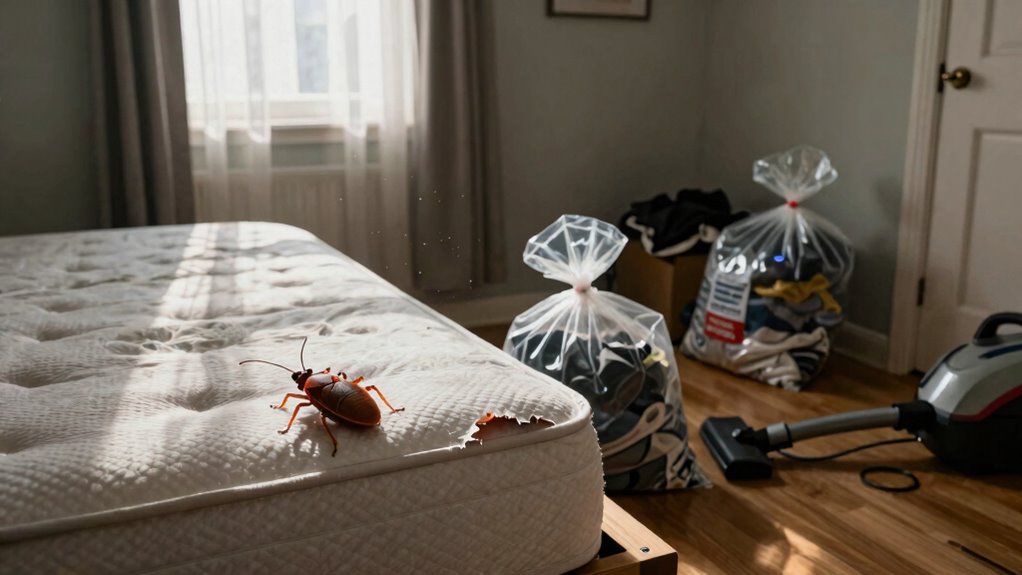
Prepping for the exterminator is no one’s idea of a good time, but it’s the difference between one messy day and a repeated nightmare. Proper furniture placement is non-negotiable for effective pest control treatment. Every baseboard, corner, and crack must be exposed for the chemicals or heat to reach. Start with clutter removal, clearing floors, shelves, and under beds. Nothing should block the treatment zone.
Move furniture away from walls at least 18 inches, and flip mattresses upright. Empty closets and drawers, piling contents into sealed bags on a cleared bed or table. Vacuum thoroughly, then toss the bag outside immediately. Disassemble bed frames and pull dressers from walls to ensure full access. For ongoing protection, consider placing six-sided zippered encasements on mattresses and box springs to seal out any surviving bugs. Skipping steps invites a second visit, costing more time and cash. This is a key step in your home pest control prep. Bottom line: treat prep like a marathon, not a sprint. Get it done, and the pros handle the rest of the extermination service.
What to Do With Clothes, Bedding, and Shoes Immediately
Hot water washing and high heat drying are the immediate solution for infested clothes and bedding. The dryer’s high heat, set to at least 30 minutes, will kill all bed bugs and their eggs.
For shoes and bags, steaming them for 30 seconds per area will do the same job. This method protects your items from heat damage while eliminating pests.
You can also use a garment steamer for quick bed bug treatment on delicate fabrics. Just focus the steam on seams and folds where bugs hide.
If you need a professional pest control solution, consider contacting an exterminator for stubborn infestations. Always check your laundry and footwear regularly to prevent a full outbreak. For an extra layer of protection, a plant-based laundry additive can kill bed bugs on contact during any wash cycle.
Hot Water Washing
Laundering clothes and bedding in hot water isn’t just smart; it’s basically a death sentence for bed bugs. Water at 122°F (50°C) kills bugs and eggs on contact, making it a reliable first step for pest control.
Yet, protect fabric dye by checking care labels. Some colors bleed in high heat, so always test a hidden area first.
For damage prevention, avoid overloading the machine. Agitation and heat need room to work effectively.
Sort items by color and fabric type, especially delicate shoes or silk. Set water temperature to at least 120°F (49°C) for a full cycle.
Use a heavy-duty detergent to help dislodge any bug residue. After washing, keep items separate until they move to drying.
This method alone won’t fix a large infestation. But it is a solid, cheap start for any bed bug treatment plan. After drying, you can also apply a food-grade diatomaceous earth in cracks and crevices to target any surviving bugs.
High Heat Drying
Once the washing machine finishes its spin cycle, the real knockout punch comes from the dryer. High heat drying hits the thermal threshold of about 120°F, which kills bed bugs and their eggs in under 30 minutes.
Clothes, bedding, and shoes should go straight in on the highest setting your machine allows. The dryer’s sustained heat penetrates fabric layers, and fabric retention of that warmth finishes what washing started.
Don’t overload the drum; air needs room to circulate. For shoes, a medium-high cycle for 30 minutes works, but skip anything with glued soles because they might warp.
Tumble dry everything for a full cycle, then let items cool inside the dryer. That extra time guarantees the heat reaches every seam and fold for complete pest control.
Bottom line: the dryer is your fastest, cheapest exterminator. Just don’t melt your sneakers.
Check labels first, but generally, high heat wins for effective bed bug treatment. For an additional layer of defense, consider using TSA-approved travel sprays inside luggage after drying.
Steaming Shoes and Bags
For items that cannot handle high heat, a garment steamer becomes your next best friend. Steaming shoes and bags is effective for pest control, just be thorough by hitting every seam and crevice.
The steam must reach 212°F to kill bed bugs and eggs on contact. This method offers cost prevention by avoiding the need to replace expensive leather goods.
For direct steam contact, hold the steamer nozzle against the fabric for 30 seconds per section. To treat inside surfaces, steam shoe interiors, bag linings, and zipper tracks.
Dry completely by letting items air out for 24 hours before use, as dampness invites mold. Repeat weekly because eggs may hatch later, so a follow-up steaming guarantees no survivors.
It’s a calm, methodical approach with no heat damage, just patient eradication. A simple $40 steamer beats buying new boots for your home pest management routine. For added protection, follow up with a spray that offers up to 16 weeks residual to treat cracks and crevices around baseboards.
How to Monitor for Bed Bugs After the Treatment Is Done
Three weeks after treatment, perform a thorough post-treatment inspection for bed bugs. Check for bites, live bugs, new fecal matter, or cast skins as clear signs of infestation activity.
Interceptor traps placed under bed legs and quality mattress encasements simplify your monitoring routine. These traps often use smooth, non-climbable walls to prevent bed bugs from escaping after they fall in.
If you detect any trouble, call a professional exterminator for a follow up service.
Post-Treatment Inspection
The waiting game is the worst part of any bed bug battle. A proper post treatment inspection is your final check, done roughly three weeks after your pest control service.
This is not a casual glance around the room. It is a systematic sweep, checking every crack and crevice you can reach.
First, examine your mattress encasements for any new tears or small black spots. Second, check all interceptor traps placed under bed legs. A single bug here means trouble.
Third, inspect the seams of couches and chairs with a bright flashlight. Bed bugs love these dark folds.
Fourth, scan baseboards and picture frames for fresh fecal matter or shed skins. If you find zero evidence, you are likely clear.
But do not relax completely yet. Maintain vigilance for another month, using non-toxic, pesticide-free traps to ensure safe detection without chemical exposure.
A clean post treatment inspection is a good sign, not a guarantee. You need ongoing monitoring for total bed bug control.
Monitoring Signs of Infestation
A clean post-treatment inspection is a relief, but it is not a free pass to ignore your home for the next year. Early detection is key, so a post treatment check at three weeks is non-negotiable.
Look for live bugs, new fecal smears, or cast skins. Mattress encasements help, but interceptor traps under bed legs catch wanderers. Escape-proof walls in these traps ensure that any bugs climbing up from the floor are permanently contained for monitoring.
| What to Check | Where to Look | Why It Matters |
|---|---|---|
| Live bugs | Mattress seams, box springs | Active infestation |
| Fecal spots | Sheets, baseboards | Fresh activity |
| Cast skins | Cracks, furniture joints | Molting bed bugs |
| Bite marks | Skin at night | Possible feeding |
If you spot any sign, call the exterminator for a follow up treatment. One bug means another treatment session is needed.
Ignoring it is like skipping a dentist visit, then wondering why your tooth aches. Maintain the traps and stay vigilant, and you will stay bug free.
Why DIY Bed Bug Treatments Rarely Work (and What to Try Instead)
Over the counter foggers and store bought sprays are the bed bug equivalent of firing a water pistol at a house fire. They scatter the colony rather than kill it, driving bugs deeper into walls and furniture.
Over the counter foggers and store bought sprays are the bed bug equivalent of firing a water pistol at a house fire.
Worse, many people mistake harmless look alike insects like spider beetles or carpet beetles for bed bugs. This wastes money on the wrong battle entirely. What works instead includes high heat laundering.
Wash bedding weekly in hot water, then dry on high for 30 minutes to kill all stages. Steam directly using a handheld steamer reaching 200°F on seams, baseboards, and sofas.
Apply diatomaceous earth as a thin dust layer in crevices. It desiccates bed bugs over several days.
Vacuum relentlessly and then seal and discard the bag each time. These slow, low cost methods reduce pest pressure but rarely wipe out the infestation. Missing a single egg means starting over. For complete elimination, consider professional heat treatment or a targeted insecticide application from a licensed exterminator.
How Much Does Professional Bed Bug Treatment Cost?
Professional bed bug treatment costs usually range from $300 to $1,500 per room. Your final price depends on treatment method, home size, and how bad the infestation is.
Inspection fees typically add $150 to $300 to your total bill. A thorough search of beds, furniture, and baseboards is included in that cost.
| Treatment Method | Average Cost Per Room | Number of Visits |
|---|---|---|
| Heat Treatment | $1,000 to $1,500 | 1 visit |
| Insecticide Treatment | $300 to $600 | 2 to 3 visits |
| Steam Treatment | $400 to $800 per room | 1 to 2 visits |
| Fumigation (whole house) | $2,000 to $4,000 (total) | 1 visit |
| Canine Inspection | $300 to $500 (add-on fee) | 1 visit |
Heat treatment is pricey but often works in a single visit. Insecticide is cheaper but requires patience with multiple treatments.
Most people find a middle ground works best. Expect $800 to $1,200 per room for reliable results.
The bottom line is to invest in a professional exterminator. It beats buying three bottles of foggers that simply do not work. Combining multiple methods, like sprays and ultrasonic devices, can enhance overall pest control in your home.
How to Prevent a Reinfestation (Even If You Killed Them All)
Even a perfectly executed heat or insecticide treatment leaves your home with zero residual protection. Reinfestation is not just possible, it is likely if you skip the follow-up steps.
The moment you think you are done, a single hitchhiker bed bug from a neighbor’s apartment could start the whole circus again. Here is how to keep your victory permanent.
First, seal the beds. Install bed bug proof mattress encasements on every mattress and box spring to trap any remaining bugs and block new settlers.
Second, monitor with traps. Place interceptor traps under bed and sofa legs to catch wandering bugs and give you an early warning.
Third, vacuum religiously. Focus on vacuuming infested areas like mattress seams, baseboards, and furniture crevices, then immediately dispose of the bag outside. Boric acid powder can be reapplied in cracks after vacuuming to maintain a protective barrier.
Fourth, inspect after three weeks. Look for bites, live bugs, or dark spots, and if you see anything call a pro before it becomes a full-blown infestation.
Frequently Asked Questions
Can I Stay in My Home During Heat Treatment?
No, you should not stay in your home during heat treatment. The process raises room temperatures between 135°F and 145°F, which poses serious heat safety risks for humans and pets.
Treatment duration runs six to eight hours, making it impossible to remain inside. Professionals will ask everyone to leave until the space cools completely.
Think of it like a very long, very hot car ride, except you can’t just roll down a window. For effective pest control, this heat penetrates wall voids and furniture to eliminate bed bugs, cockroaches, and termites.
Your best move is to vacate the premises and let the heat treatment do its job. If you’re looking for a safe, chemical free pest control solution, this method delivers fast results without lingering residues.
Just make sure you schedule a professional inspection first. Then you can buy a full heat treatment package with confidence, knowing your home will be pest free when you return.
Do I Need to Wash All Clothes or Just Infested Items?
Yes, all clothes must be washed, not just infested items. Laundering with hot water and high heat drying kills every bed bug and egg, preventing hidden survivors from reinfesting your home.
After drying, store your clothes in sealed plastic bags or airtight bins to keep them safe. Skipping nearby fabrics like curtains or upholstery risks failure and wasted effort.
It’s a pain, but thoroughness saves time and money later. A single missed shirt can undo your entire bed bug treatment.
Use a professional grade bed bug laundry additive for extra protection. Always inspect and isolate clean clothes to avoid cross contamination.
For complete bed bug control, combine washing with steam treatment or insecticide sprays. This ensures no survivors escape your pest management plan.
Investing in a quality bed bug proof mattress encasement also helps. Smart buyers choose long term prevention over repeat treatments.
Will Heat Treatment Damage Electronics, Plastics, or Furniture?
Yes, heat treatment can damage items with low durable goods ratings, like cheap plastics or electronics with sensitive melting points. Think of a thrift store lamp warping or a laptop battery swelling in high heat.
During professional pest heat treatment, temperatures hit 135°F to 145°F to eliminate bed bugs and other pests. This range is safe for most furniture but risky for items rated below 140°F.
A good rule for pest control prep is to remove or protect anything with a known melting point under 150°F. You should check your electronics, vinyl blinds, and plastic storage bins before treatment begins.
Bottom line for smart buyers? Ask your pest pro for a pre treatment checklist to avoid costly damage. This simple step ensures your residential heat treatment goes smoothly and safely.
How Soon Can I Sleep on My Bed After Insecticide Treatment?
It is usually safe to sleep on the bed once the insecticide has dried, which takes two to four hours. Product safety depends on waiting for this period.
Residual effects mean the spray continues killing bugs for weeks but is harmless when dry. Do not wash sheets immediately, the residue needs to stay put.
A quick sniff test works, if it still smells like chemicals, wait longer. For best pest control results, always check the label on your specific bed bug spray or flea treatment.
Buying a quick dry insecticide can help you get back to sleep faster without risking your health. Remember that professional grade products often have different dry times, so buyer beware.
If you want to know exactly when it’s safe, use a fan to speed up drying and then test a small corner of the mattress. You want to eliminate pests without harming yourself or your family.
Are Bed Bugs Able to Spread to Neighboring Apartments or Rooms?
Yes, bed bugs are notorious hitchhikers that spread easily to neighboring apartments through cracks, pipes, and electrical outlets. They don’t respect walls, so a single infestation can quickly become a building-wide problem.
Professional residual barrier sprays applied to baseboards and entry points create a chemical fence that catches runners before they migrate. Mattress encasement traps seal off hiding spots, turning beds into isolated islands against these pests.
Without these defenses, expect uninvited guests because bed bugs are better at apartment hopping than most tenants. Bottom line: seal and spray with trusted pest control products, or risk a buggy block party in your unit.


