
Cleaning up after cockroaches doesn’t require a hazmat suit, but it does demand a smart, step-by-step plan. This guide to how to clean your kitchen after a cockroach infestation covers everything from sealing food in glass containers to fixing leaky pipes that attract them.
You’ll learn why a HEPA vacuum beats a broom, how to sanitize dishes without guesswork, and when sticky traps along baseboards tell you it’s time to call a pro for fumigation. Keep reading for the full rundown below.
At A Glance
- Wear gloves, mask, long sleeves; use HEPA vacuum; ventilate room.
- Discard infested food and cardboard immediately; seal new food in containers.
- Scrub all surfaces, pull out appliances, clean vents and drains.
- Sanitize dishes in hot water or bleach solution; discard un-cleanable items.
- Seal cracks with silicone caulk and copper mesh; remove moisture sources.
How to Clean Up After a Cockroach Infestation Safely
Cleaning up after a cockroach infestation requires caution, but it is a necessary chore. First, put on disposable gloves, a mask, and long sleeves to avoid stirring up allergens that trigger roach allergy symptoms like sneezing and asthma attacks.
Never sweep or vacuum dry droppings. Instead, use a HEPA filter vacuum to safely suck up debris from cracks and crevices.
Empty the vacuum bag immediately into a sealed outdoor bin. For severe cases, consider professional fumigation cost, which averages $200 to $600 for a full kitchen.
Deep cleaning first prevents repeat visits from pest control experts. Ventilate the room to reduce airborne particles and improve indoor air quality.
This step is tedious but non-negotiable, like flossing after a candy binge. Done right, it slashes health risks and future pest control bills.
Stick to the plan and use insecticide sprays carefully in targeted areas, such as a spray with a flushing agent to force roaches out of hiding spots for effective treatment.
A thorough clean up also helps you identify entry points for future prevention.
Discard Contaminated Pantry Food and Inspect the Rest
Inspect every pantry item with the suspicion of a detective at a crime scene. Cockroaches leave telltale specks, smear marks, or chewed packaging.
Inspect every pantry item with the suspicion of a detective at a crime scene.
Toss anything with holes, stains, or a weird odor immediately. This includes unopened boxes, because they chew through thin cardboard for pest control.
Expired food removal isn’t just about dates, it’s about safety. Now, for the survivors, do a pantry inventory check.
Seal all flours, sugars, grains, and cereals in glass, metal, or thick plastic containers. A half-used bag of chips must be gone completely.
Canned goods are fine if the lids are intact for long-term pantry organization. Don’t skip pet food, as it’s a feast for them during roach infestation cleanup.
When in doubt, throw it out while handling kitchen hygiene tips. Your trash can handles the loss better than your stomach handles the risk.
The bottom line is to be ruthless and cut their food supply fast. This approach ensures home pest management works effectively. Non-toxic pheromone traps can also be placed near dried foods for ongoing monitoring.
How to Vacuum Roach Droppings and Egg Casings
Vacuuming roach droppings and egg casings requires patience, a good machine, and perhaps a strong stomach. A HEPA-filter vacuum is non-negotiable here because regular vacuums just blow allergens back into the air.
Any contaminated food crumbs must go too, or you are just feeding the next generation. Start with cracks and crevices using a narrow attachment and go slow.
Egg casings are tough little pods and they won’t dislodge easily. Vacuuming dry droppings without a HEPA filter is a fast track to a sneeze fit.
Proper ventilation needs are real. Open a window before you start and keep it open for ten minutes after.
Once done, remove the bag, seal it in a plastic bag, and toss it straight into an outdoor bin. No second chances for these pest control hazards.
For best roach cleanup results, always use a certified HEPA vacuum to trap microscopic allergens. This step is critical if you plan to sell your home or avoid respiratory issues.
After vacuuming, applying diatomaceous earth in cracks and baseboards provides long-lasting protection as long as the powder stays dry.
Wash and Sanitize Every Kitchen Surface and Appliance
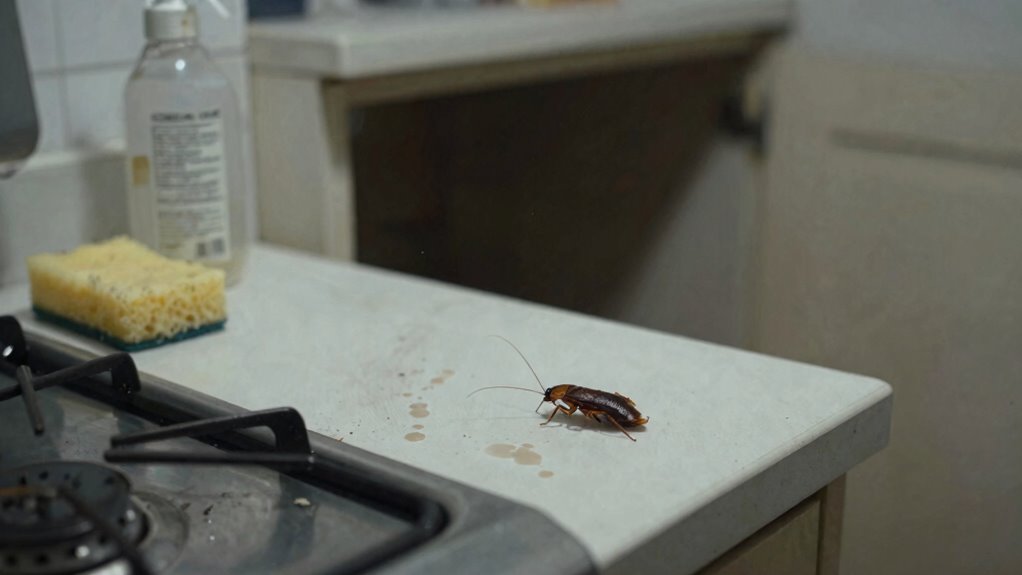
Countertops and cabinets need a thorough scrub with hot, soapy water or a commercial disinfectant. Pay special attention to corners and edges where roach residue hides.
Appliances must be wiped inside and out including the often-forgotten space beneath the fridge. Sinks and drains get an enzyme cleaner or stiff brush to remove organic buildup that attracts pests. Products like Green Gobbler Enzyme Drain Cleaner digest oils, fats, and grease within hours to eliminate food sources for pests.
Finally, sanitize all utensils, dishes, and cookware in hot water or a dishwasher cycle before reuse. Nobody wants cockroach seasoning on their dinner plate, so use a roach control approach for every surface.
Countertops and Cabinets
Cockroaches leave behind bacteria and allergens that a simple wipe won’t remove, so a thorough deep clean of your countertops and cabinets is non-negotiable. Start by clearing every item off these surfaces, then wash them with hot, soapy water to physically disrupt the roach lifecycle by removing eggs and droppings. Follow that wash with a bleach solution (one part bleach to nine parts water) or an EPA-registered disinfectant to kill lingering pathogens. Don’t skip the inside of cabinets, especially cracks and corners where roaches hide their nymphs and fecal spots. Natural repellents like cedar oil or bay leaves can be placed in cabinets later, but they only work as a preventive step, not a cure for existing filth. So stick to the disinfectant first, and dry everything thoroughly before restocking with sealed containers to avoid re-infestation. For a pest-free kitchen, focus on high-touch zones like hinges and shelf seams, and repeat this cleaning routine weekly during an active infestation. If you want long-term control, pair this with gel bait stations or a professional pest control service, and always inspect secondhand furniture before bringing it home.
Appliances Inside and Out
An appliance’s exterior might look clean, but the real mess is hiding behind the fridge, under the stove, and in the crumb tray of your toaster. Appliance disassembly reveals the true roach hiding spots, which are warm, dark, and full of crumbs. For long-lasting protection, consider applying a residual insecticide like chlorfenapyr to these hidden areas after cleaning. To properly sanitize, pull each appliance away from the wall to expose floor-level debris. Remove back panels on fridges and stoves to access inner cavities for thorough pest control. Vacuum all vents, coils, and motor compartments using a HEPA filter for effective cockroach elimination. Wipe every surface with a bleach-based disinfectant, focusing on crevices for bug prevention.
It is tedious, but skipping this step leaves roaches a cozy condo to rebuild their empire. Remember, they do not pay rent, but they certainly leave a mess for your next deep cleaning.
Sinks, Drains, and Utensils
After tackling the warm, crumb filled caves behind your appliances, it is time to focus on the parts of the kitchen that see water every day. A sink isn’t just for washing. It is a roach motel.
Pour an enzyme cleaner down each drain. This breaks down the greasy gunk that roaches eat.
Then take a stiff brush directly to the drain rim and flange. Scrub until no residue remains to remove eggs and hiding spots.
You can buy a quality enzyme cleaner for about $12 at hardware stores. A stiff brush with nylon bristles runs $5.
Boiling water every week afterward keeps buildup away. It is cheap and effective for roach prevention.
Sanitize utensils in a dishwasher at 140°F or boil them for five minutes. This kills any lingering germs before storage.
Dry thoroughly before storing to stop pests from returning. Overnight application of an enzyme gel works best to clear out breeding sites deep inside pipes. These steps help you control kitchen pests effectively.
Sanitize Dishes, Utensils, and Cookware After Roaches
Cleaning dishes, utensils, and cookware after a cockroach infestation requires proper sanitization to eliminate germs and allergens. Wash all items in hot, soapy water, then soak them in a bleach solution using one tablespoon of bleach per gallon of water for at least two minutes before air drying.
Inspect each piece for cracks or damage where roaches might linger, and discard anything that cannot be thoroughly cleaned. This pest control step ensures your kitchen stays safe from cockroach residue.
For thorough cockroach removal, focus on hidden crevices in cookware and utensils. A proper sanitization routine kills roach allergens and keeps your home pest-free.
Use a bleach soak as a final measure to sanitize all items after washing. This method targets lingering germs from roach droppings and eggs. Overuse risks include burning or redness if any cleaning solution is applied excessively, so adhere strictly to the recommended dilution.
Wash in Hot Water
All dishes, utensils, and cookware that touched cockroaches need a hot-water sanitization. This step kills germs and allergens left behind, so skipping it invites trouble.
Use boiling pots for metal or glass items. Submerge them for at least 10 minutes to guarantee thorough sanitation.
Run ceramic and plastic through dishwashers on the highest heat cycle above 140°F. This destroys any residue from cockroach activity.
Scrub all items with hot, soapy water first. Use a stiff brush for crevices where roach droppings hide.
Dry completely with clean towels or air-dry. Dampness attracts pests, and they never pay rent.
This method costs nothing extra beyond your hot water bill. For porous items like wooden cutting boards, consider replacing them.
Bottom line: soak or machine-wash everything, then dry thoroughly. Your future self and stomach will thank you, and you’ll keep cockroach control effective.
Sanitize With Bleach
Hot water works well, but bleach is the heavy artillery for cockroach cleanup.
A properly mixed solution of one part bleach to nine parts water kills lingering bacteria and denatures roach allergens on dishes, utensils, and cookware.
This is structural bleach, meaning it treats the surface itself, not just the grime.
Soak items for two minutes, then rinse thoroughly with hot water.
That rinse step is critical for residue prevention; leftover bleach can leach into food and leave a chemical taste.
Porcelain and stainless steel handle this fine, but skip it on aluminum or nonstick pans.
Bleach will pit them, so avoid using it on those materials.
For everyday items, a dishwasher cycle beats manual scrubbing for deep pest control sanitation.
The bottom line is that bleach sanitizes effectively for cockroach cleanup.
But you gotta rinse like you mean it to avoid chemical residue.
For ongoing prevention, dust boric acid powder into cracks and behind appliances.
Inspect Before Reuse
Before you grab that mug, inspect it like a detective at a crime scene. Cockroaches leave invisible trails of saliva, feces, and bacteria. These contaminants pose serious health risks like salmonella and asthma flare-ups, so assume any dish is contaminated until proven otherwise. A quick rinse won’t cut it, and that’s where professional pest control habits come in handy.
Follow this checklist for every item to keep your kitchen safe from roach infestations and foodborne illness. First, check crevices under rims and handles for droppings or egg casings, using a flashlight to spot hidden traces. Second, wash each piece in hot, soapy water, scrubbing thoroughly, then rinse completely to remove any residue. Third, sanitize by soaking in a bleach solution of one tablespoon per gallon for two minutes, or run a dishwasher cycle for extra protection. Fourth, dry everything completely on a clean rack, never a towel, since dampness attracts pests like cockroaches and ants. After that, store dishes in sealed bins to prevent re-contamination from pantry pests. Proper food storage is your best defense, so keep all cups, plates, and utensils in airtight containers. Bottom line: if it touched the pantry, it needs a full scrub-down, no shortcuts. For extra protection, use airtight containers with silicone gaskets to seal out any remaining pests. For buying peace of mind, consider investing in sealed storage bins and a reliable dishwasher sanitizer, as these reduce repeat cleaning time. If you suspect an ongoing roach problem, contact a licensed exterminator for a home inspection, since DIY traps often miss hidden nests. Your morning coffee deserves a truly clean mug, so treat every surface as suspect until you’ve finished the full protocol. Stay safe, stay thorough, and you’ll keep your family healthy without the stress of pest-related contamination.
Seal Cracks and Entry Points to Block Roach Re-Entry
A critical but often overlooked step after a roach cleanup is turning your home into a fortress. Cockroaches follow wafting fumes from food odors, and they use vibration detection to find cracks in your defenses.
Seal every gap like a paranoid squirrel. Here’s what works, since caulk is cheap but re-infestation is annoying.
| Area | Action & Material |
|---|---|
| Baseboards | 1/4-inch bead of silicone caulk ($5/tube) |
| Pipe gaps | Copper mesh stuffed tight; won’t rust |
| Window frames | Weatherstripping, $10 per roll |
| Door bottoms | Sweep with rubber seal, $15 |
| Cable entries | Foam sealant, $4 per can |
Check behind appliances and under sinks. Any crack wider than a credit card is a highway for roach re-entry. For uneven gaps, consider brush seal strips with nylon bristles that flex to fill spaces up to 0.5 inches wide.
Fill it now, or you’ll hear tiny footprints later. Use these pest control solutions to block entry points and stop cockroach infestation before it starts.
Remove Moisture Sources That Attract Roaches to Your Kitchen
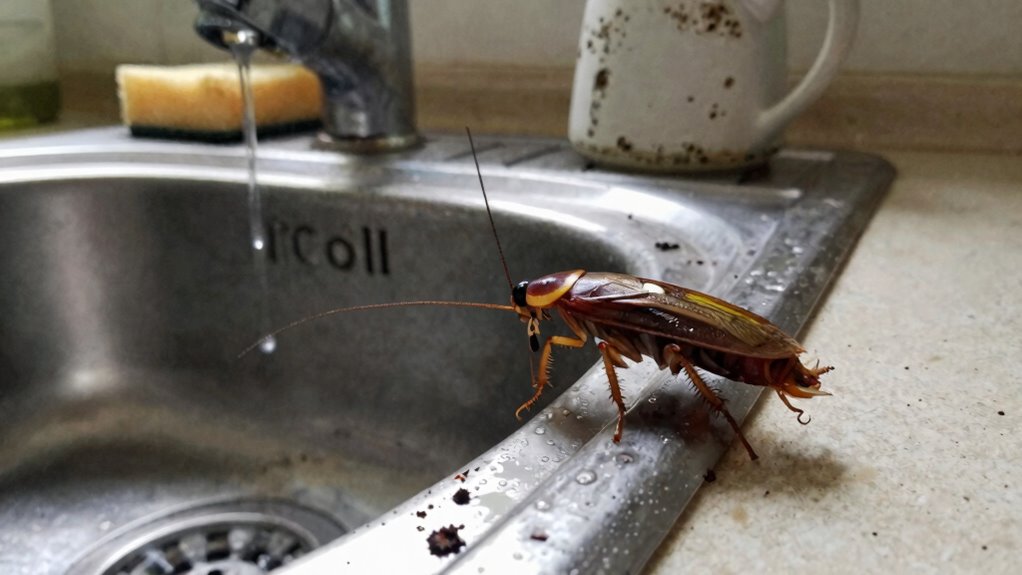
Cockroaches need water to survive, and your kitchen is an all you can drink buffet if you are not careful. Humidity monitoring is key here, since even a tiny drip can keep them coming back for more.
A dry kitchen is your best defense against thirsty cockroaches.
Start by fixing leaky pipes and faucets. Those slow drips are like a welcome mat for roaches.
Check under sinks for damp wood or standing water, a favorite roach hangout. Dry damp sponges and mops by hanging them instead of tossing them in a puddle.
Empty drip trays under your fridge or dehumidifier every week. Place a dehumidifier near the sink or dishwasher to pull moisture from the air and cut their water supply. Choose a model with adjustable humidity control to precisely maintain conditions below the 50% threshold that deters pests.
A dry kitchen means fewer roaches and a better pest control outcome.
Throw Out Trash and Cardboard That Hide Roaches
Your trash and cardboard boxes are basically a roach hotel with an open buffet. Those corrugated layers create perfect hiding spots and egg-laying sites for cockroaches.
Cardboard disposal must be ruthless and immediate. Recycle or discard all boxes, bags, and paper packaging right away.
Cockroaches chew through cardboard like it is candy, so do not give them a free pass. Trash removal requires daily diligence for effective pest control.
Take out kitchen garbage every night, even when the bin is not full. Always rinse recyclables to remove food residue before tossing them.
Wash bins weekly with hot soapy water. A standard 13-gallon can costs about 15 dollars.
Consider splurging on a stainless steel model with a tight lid. Roaches cannot pry those open, which stops infestations at the source.
The bottom line is to starve them completely. Eliminate these welcoming hideouts and food sources to get rid of roaches for good.
For extra defense against lingering pests, consider using DEET-free formulations that repel bugs safely without harsh chemicals.
Set Traps and Baits to Monitor Roach Activity
The cleanup is done, but that does not mean the roaches are gone for good. Place sticky traps in corners, under appliances, and near entry points to catch any survivors.
These roach traps will show you where they are still hiding. Then set up bait stations with a different insecticide if the old one stopped working.
This baiting strategy helps you monitor pest activity and reduce infestations over time.
Check the traps regularly to track roach movement and adjust your roach control plan as needed.
Many traps last up to six months in drier areas, providing long-lasting monitoring without frequent replacement.
Place Sticky Traps
Sticky traps are the kitchen’s version of a security camera. They don’t need batteries and they work while you sleep.
They reveal where roaches travel and hide. This helps you target your pest control efforts wisely.
Place them after completing moisture control and sealing cracks. Those steps drive roaches into open paths.
Position traps along baseboards, near appliance legs, and under sinks. Roaches prefer edges for movement.
Use at least six traps in a standard kitchen. Space them two to three feet apart for best coverage.
Check traps daily and replace when covered with dust or roaches. Typically do this every week.
Record catch locations to identify hotspots. Ignore one off finds and focus on clusters.
This isn’t glamorous, but it’s cheap detective work. A dozen traps cost under ten dollars.
They save you from spraying blindly with insecticides. Place them tonight and check tomorrow.
You will know exactly where the battle begins. That is where you apply your roach bait and gel.
Use Bait Stations Strategically
Once the sticky traps reveal where roaches are traveling, it is time to switch from watching to feeding. Bait placement matters, so position stations near those trap hotspots like under sinks and behind fridges, with their openings flush against walls to capitalize on roach pathways.
Use bait rotation by switching active ingredients every few months to outpace resistance. Gels like Advion work well, but bait stations costing around $5 to $8 for a six pack offer longer lasting control without mess.
Place them in sheltered corners, avoiding water sources that dilute poison. Check weekly and replace uneaten bait after three months.
Rotate between brands using Combat Max or Harris to keep roaches hungry and dying. Strategic placement plus rotation equals a cleaner kitchen, or as one pest pro might say, “They come for the snack; they stay for the silence.”
When to Call a Pro for a Persistent Cockroach Problem
Even the most diligent DIY cockroach cleanup can hit a wall when traps stay full and roaches keep appearing. That is the moment to call a professional exterminator for a persistent cockroach problem.
Even the most diligent DIY cleanup hits a wall when traps stay full and roaches keep appearing—that’s when you call a pro.
A serious infestation that spans walls or multiple rooms needs structural fumigation or targeted heat treatments from licensed pros. Their approach beats any home remedy because they have tools and training you simply cannot replicate.
Over-the-counter sprays often fail because roaches build chemical resistance, but pros rotate industrial-grade formulas that break that tolerance. They also find hidden colonies using thermal imaging or borescopes, locating nests inside walls, under refrigerators, or behind dishwashers.
Safety is another big reason to hire help, as fumigation tents seal your entire home and kill every roach while keeping toxic fumes fully contained. This service typically costs between $1,500 and $4,000, but it comes with a guarantee that DIY products never offer.
Most pest control companies provide follow-up visits, and if roaches persist after treatment, they return at no extra charge. That warranty gives you peace of mind and saves you from endless repeat purchases of sprays and traps.
When DIY traps feel like a futile party invite, a pro’s structural fumigation is the final, decisive guest that clears the room for good. You can book a home inspection today and get a written quote before committing to any treatment plan.
Frequently Asked Questions
Can I Use Bleach on My Dishes After Roach Contamination?
Yes, you can safely use bleach on your dishes after roach contamination.
This is a reliable method for home sanitization when cockroaches have touched your kitchenware.
Mix one tablespoon of bleach per gallon of water for an effective cleaning solution.
Soak your dishes for just two minutes, then rinse thoroughly with hot water and let them air dry.
Bleach safety is key here because too much can leave harmful residue on your plates.
Cockroaches carry pathogens and bacteria, not bleach resistant stains or toxins.
A practical tip: your dishes won’t glow or smell like a pool, but they will be germ free.
If you need a professional solution, look for an EPA registered kitchen sanitizer for pest control incidents.
For ongoing cockroach prevention, consider hiring a licensed pest control company.
They can help you identify roach hiding spots and recommend the best insecticide fogger or bait gel for your home.
The bottom line is simple: use bleach correctly, and your kitchenware will be ready for dinner.
This method keeps your family safe and your dishes truly clean after a roach problem.
How Long Should I Air Out the Kitchen After Cleaning?
Air it out for two to four hours, minimum. That’s enough time for fume extraction from bleach or disinfectants, and for odor neutralization to kick in.
Open windows, turn on a fan to speed it up. If the smell lingers, you probably missed a crumb or didn’t rinse well.
A HEPA vacuum helps with leftover particles, but fresh air does the heavy lifting. While you air out, consider a pest control barrier spray around baseboards and entry points for extra protection.
That spray works with ventilation to keep cockroaches and ants from returning. Bottom line: crack a window, make a coffee, and wait until it smells like nothing.
For kitchen pest prevention, pair your deep clean with a targeted ant bait or roach gel. Airflow clears chemical residues, and the right pest control product seals the job.
Will Vacuuming With a Regular Vacuum Spread Allergens?
Yes, a regular vacuum will spread allergens into the air. It lacks HEPA filtration, which is essential for containing pest debris like cockroach particles.
With cockroach debris, this becomes a serious health risk. A standard vacuum’s exhaust just blows tiny particles back around, not helpful for pest control.
For safe cleanup, invest in a true HEPA vacuum costing $150 to $300. It traps 99.97% of particles as small as 0.3 microns, keeping your air cleaner.
Without HEPA, you’re just redistributing the mess. To buy the right pest control equipment, look for vacuums certified for allergen and insect debris removal.
Should I Throw Away All Opened Food Packages in the Pantry?
Yes, throw away all opened food packages in the pantry. Cockroaches can chew through thin plastic and cardboard, leaving droppings or eggs you cannot see.
A simple sealed container inspection won’t catch microscopic contamination. Pantry shelf disposal is the only safe move here for effective roach control.
Think of it as a purge, not a loss. You’re saving future groceries from becoming a roach buffet.
Seal new items in glass or thick plastic bins after cleanup. No half measures are needed when you choose proper pantry pest prevention.
For long term roach proofing, upgrade to airtight storage containers. This simple step stops reinfestation and protects your kitchen pest management efforts.
If you want to buy roach proof containers or pest control products, look for heavy duty glass or BPA free plastic options. These are the best tools for a pest free pantry.
How Do I Clean My Refrigerator’s Water Line After Roaches?
Flush the water line with a vinegar-water mix (1:1) for 10 minutes, then run fresh water through it. For the reservoir, remove it and soak in a bleach solution (1 tbsp per gallon) for 15 minutes.
Don’t forget refrigerator coil cleaning. Dust there can re-infest and attract roaches again.
Sanitizing the water reservoir prevents bacterial growth and keeps your ice and water safe. A $10 brush kit helps reach tight spots around the coils and behind the fridge.
Bottom line: scrub, flush, and dry thoroughly to stop roach return. This pest control step is essential for your kitchen appliance hygiene.


