
Diatomaceous earth can kill termites, but only those that crawl through the powder—it’s a mechanical killer, not a poison. The sharp particles shred their waxy coating and dry them out within 16 to 48 hours, yet humidity above 60% turns it into a useless paste.
It won’t reach the hidden queen, so treat it as spot control, not a whole-colony fix. If you’re weighing DIY against professional help, expect pros to charge $300–$600 for a complete job.
In this guide, you’ll learn exactly where to apply DE, how to spot the signs of an active infestation, and when it’s worth calling in an exterminator. Stick with me—I’ll break down the steps so you can decide fast and act smarter.
At A Glance
- Yes, DE kills termites through cuticle abrasion causing fatal dehydration within 16–48 hours.
- Effectiveness requires humidity below 60%; dampness neutralizes DE into a useless paste.
- DE only kills termites that physically contact it, leaving the queen and colony untouched.
- Apply only in dry, enclosed spaces like attics or wall voids to protect beneficial insects.
- DE suits spot control, but professional treatments remain necessary for complete colony elimination.
How Diatomaceous Earth Kills Termites
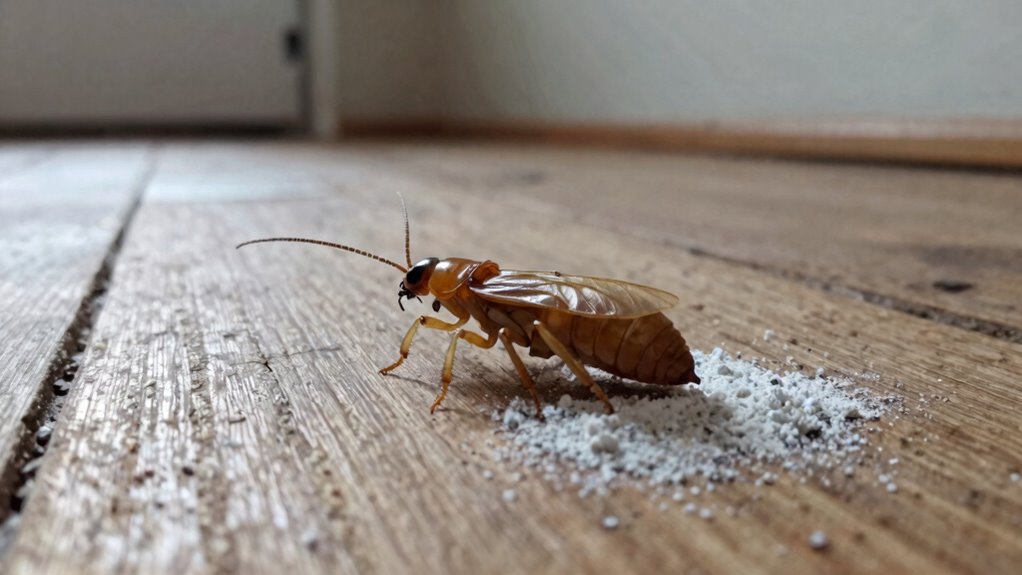
Let’s start with how diatomaceous earth kills termites. It is not a poison but a mechanical menace.
Those microscopic fossilized algae particles are brutally sharp. When a termite walks through the powder, it is like crawling over broken glass.
This cuticle abrasion scrapes away the waxy protective layer of the exoskeleton. Once that shield is gone, the real damage begins.
The powder’s porous structure causes rapid moisture absorption. It pulls the oils and internal fluids straight out of the bug’s body.
The termite fundamentally dehydrates from the inside out. It is a slow and effective way to eliminate pests.
Just remember that this relies entirely on direct physical contact. If the termite does not touch the powder, it will not be affected.
Always choose 100% pure, food-grade diatomaceous earth for safe use around your family and pets.
How Long Does DE Take to Kill Termites?
The dehydration process doesn’t happen instantly, so patience is key for effective termite control. Under dry conditions, termites usually die within 16 to 48 hours after contact, as the powder scrapes their exoskeleton and they slowly lose dampness. But high humidity above 60% can stretch that timeline or stop it entirely. That makes the environment a silent partner in the powder’s success during pest treatment. For lasting results, keep the powder dry and reapply after cleaning or rain to maintain continuous protection.
Dehydration Timeline
How long does diatomaceous earth actually take to kill termites? The dehydration process is surprisingly fast once the waxy cuticle is abraded, moisture drains out like a leaky bucket.
Desiccation speed varies based on the environment. In a dry, enclosed attic, death can come in 16 to 24 hours.
If the air is humid or the termite is near damp wood, that timeline stretches to 24 to 48 hours, sometimes longer. Think of it this way: DE works quickly only when conditions are bone dry.
It is not a magic bullet for pest control. It is a slow, gritty assassin that needs the right environment to do its job.
For best results as a termite treatment, apply in dry, hidden spaces like wall voids or under floorboards. Just do not expect instant results for termite elimination.
Patience is part of the price you pay for a non toxic tool. Effective termite management requires waiting for the desiccation process to finish.
Using a food-grade DE ensures safety for your family and pets during application.
Environmental Impact
Does diatomaceous earth harm anything besides termites? It is non toxic to humans, but breathing it in during application can still cause a dry cough, so a dust mask is a smart move.
The real problem is its ecological impact on beneficial insects, which is a genuine downside. Bees, ladybugs, and earthworms are just as vulnerable to its abrasive edges, so DE does not discriminate between pests and pollinators.
Spraying it around flowering plants or garden beds will kill helpful bugs, not just termites, which means you could lose your local pollination crew. For targeted termite control, apply DE only in dry, enclosed spaces like attics or wall voids where termites crawl but bees never visit.
Keep it far away from soil and blooms to protect earthworms and ground-dwelling helpers. Bottom line: DE is a safe, targeted pest control tool for termite removal, but use it sparingly.
Otherwise, you’ll swap a termite infestation for a bigger ecological problem, and that hurts your whole yard’s health. Stick to crack and crevice treatments, and always check for alternative termite treatment options if you have flowering plants nearby.
A little caution goes a long way, so reserve DE for indoor termite barriers and leave your garden’s natural predators alone. That way, you solve the pest issue without creating a pollinator crisis.
For maximum effectiveness against termites, ensure the environment remains dry, as moisture neutralizes diatomaceous earth’s ability to dehydrate and kill insects.
Does DE Work in Damp or Humid Environments?
Diatomaceous earth is a moisture sensitive desiccant, so it kills insects by drying them out. This means it fails in damp or humid environments. High humidity, especially above 60 percent, sharply reduces its effectiveness. The powder absorbs moisture from the air instead of the termite’s cuticle. For optimal indoor use, food grade diatomaceous earth is safe around pets and children. For the best pest control results, stick to dry, enclosed spaces like attics and crawl spaces. These areas keep the powder dry so it can work properly against termites and other bugs.
Moisture Neutralizes Effectiveness
Moisture is the kryptonite of diatomaceous earth. It turns this dry powder into useless paste, since DE kills termites by drying them out.
When damp, the particles lose their sharp, abrasive edges. They can no longer scratch through the termite’s waxy barrier, meaning the insect never loses water.
Think of it like silica gel packets. Those little beads absorb humidity, but once they’re soaked, they stop working entirely.
The problem is that even high humidity, not just standing water, ruins DE’s desiccating power. A real-world example shows a user applied it in a damp crawlspace with no results.
After drying the area and reapplying, termites died within 48 hours. The bottom line is to keep DE dry, or skip it entirely.
For damp areas, you will waste your money and time on pest control that simply cannot work. Rain or mopping wipes out effectiveness, requiring reapplication after cleaning or wet weather.
High Humidity Limits Results
Even in places without standing water, high humidity alone can sabotage diatomaceous earth. The powder has specific humidity thresholds; above roughly 60 percent relative humidity, it starts to fail.
Moisture absorption happens directly from the air, softening the jagged particles and blunting their abrasive edges. Instead of scratching the termite’s waxy cuticle, the dampened DE just sits there, like a sponge that forgot its job.
The desiccating effect is gone, so termites survive just fine. This isn’t a small drop in performance, it’s a total washout.
If you’re dealing with a humid crawl space or a damp wall void, DE is probably not your hero for termite control. It needs bone dry conditions to work effectively.
In short, high humidity doesn’t just limit results, it destroys them. So for a reliable pest control solution, always check the moisture level first. For effective application in dry spaces, choose a durable applicator with anti-clog features to ensure smooth powder flow.
Best in Dry Spaces
Stick to dry, enclosed spaces like attics, crawl spaces, and wall voids if you want diatomaceous earth to earn its keep. Damp or humid environments, such as a leaky porch flooring or a musty basement, turn DE into a sad, clumpy mess.
Dampness above 60% humidity sharply cuts its desiccating power, which is its ability to dry out termites. That means the powder stops working, so you waste both time and money on a pest control fix that fails.
Loft insulation stays dry, making it prime DE territory for termite prevention and long-term barrier protection. Porch flooring exposed to rain? Skip it entirely.
For dry above-ground spots, DE shows promise as a simple, low-cost barrier against crawling pests. In damp zones, it’s like bringing a paper towel to a flood, so don’t expect results.
Bottom line: keep it dry, or it’s just dust. Check your humidity levels first, then buy enough DE for the job if you want effective pest control. Durable particles like boric acid powders provide extended protection after dusting in dry conditions.
Why DE Won’t Wipe Out an Entire Colony
Diatomaceous earth won’t wipe out an entire termite colony because it only kills what it touches. The workers that crawl through treated areas die, but the queen and her protectors stay hidden deep in the nest. Unlike boric acid, which can remain effective for weeks when kept dry, DE loses its power quickly in humid conditions. For effective termite control, this contact only kill misses termites that never cross the dust. There is no systematic spread of DE through the colony, so the queen keeps laying eggs uninterrupted. Pests bypass DE treatment easily using mud tubes or soil. High humidity also neutralizes diatomaceous earth, making damp areas completely safe for termites. Even if you dust every visible tunnel, thousands of termites never get close. It is like trying to empty a swimming pool with a teaspoon, which is why professional pest management is needed for complete colony elimination.
What DE’s Key Limitations Mean for Your Home
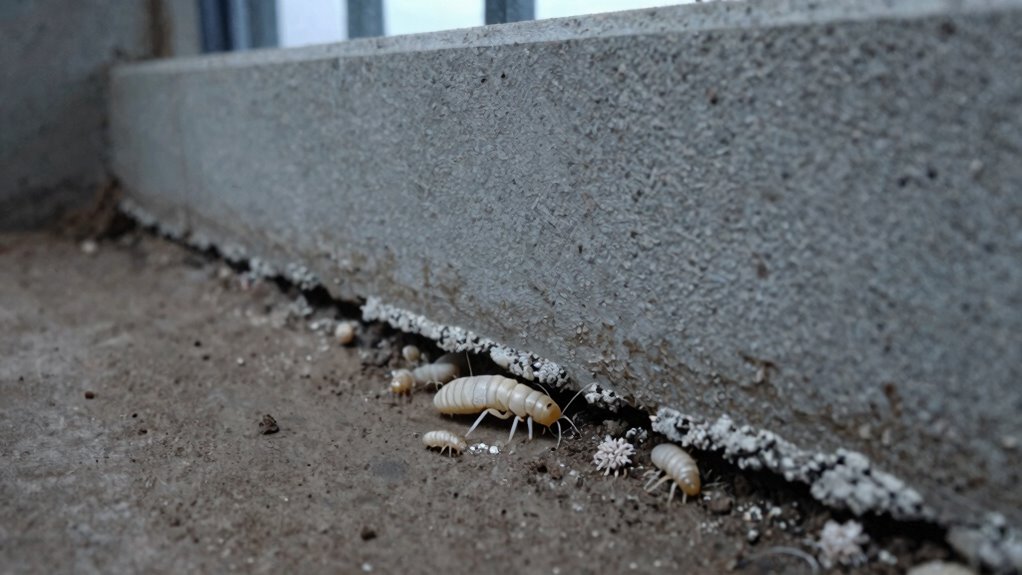
Three key shortcomings keep diatomaceous earth from being a home saving hero. First, it relies on direct contact. Termites must walk through the powder for particle ingestion to work. Hidden colony members deep in soil or wood never encounter it.
Three key shortcomings keep diatomaceous earth from being a home saving hero.
Second, colony prevention is impossible since the queen and brood stay untouched. She keeps laying eggs ignoring your dusting efforts.
Dampness is the final blow. Humidity above 60 percent turns DE into useless mud. Damp crawl spaces or basements render it ineffective.
You are left with a product that only kills exposed foragers. It does not address the core infestation. It is like locking your front door but leaving the back wide open.
For serious termite problems DE is a supplemental tool. It is not a standalone fix. This is because, like other organic options, natural solutions often struggle against larger or more stubborn pests like termites. Spend money on professional soil treatments instead.
Where Should You Apply DE for Best Results?
You have accepted that diatomaceous earth will not eliminate a termite colony. Apply it in dry, enclosed spaces where termites travel.
Focus on attic rafters, wall voids, and crawlspace joists for best results. These spots maximize abrasion mechanics since the powder stays undisturbed.
Sharp particles cause cuticle damage over time through repeated contact. Avoid damp areas because moisture kills the desiccating effect instantly.
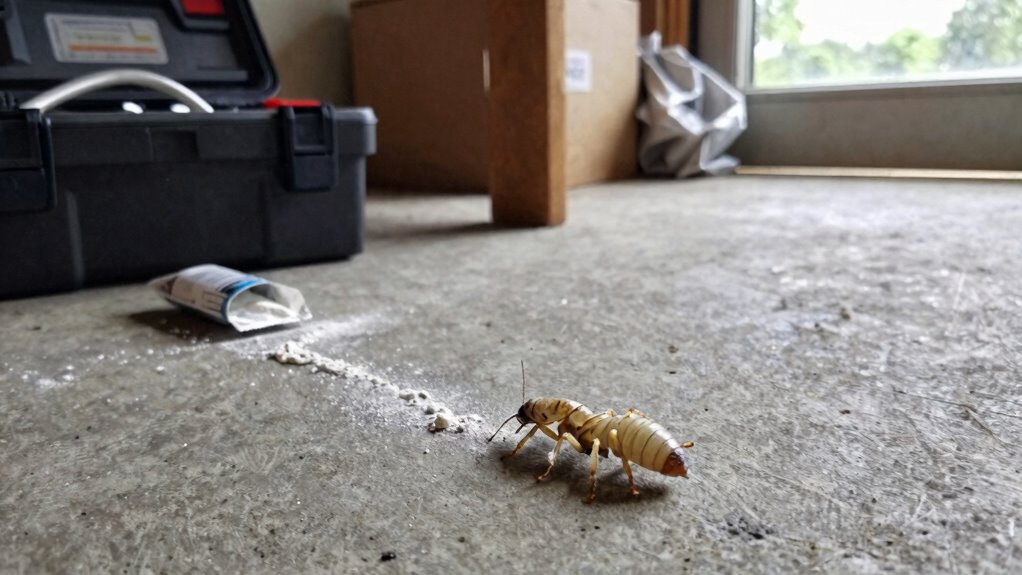
Target mud tubes or kick out holes directly with a thin dusting. Do not clump the powder or it loses its effectiveness.
A handheld duster costs around fifteen dollars and helps reach deep crevices. Skip soil and wet wood since termites bypass DE there.
Think of diatomaceous earth as a loyal but fragile sidekick. It works hard in the right room but fails if humidity is above sixty percent.
Stick to dry zones and you will buy some perimeter insurance. Remember to dust smart, not everywhere.
Combining with glue traps for routine monitoring can help you track activity and verify pest control progress without pesticides.
How Often Should You Reapply DE?
Reapplication frequency depends on dampness and disturbance, not a calendar. For ideal timing, think of diatomaceous earth as a powder that hates getting wet and kicked around.
In dry, undisturbed attics or wall voids, it stays effective for six to twelve months. You might even forget it’s there, which is perfectly fine for long term pest control.
In dry, undisturbed spaces, diatomaceous earth stays effective for six to twelve months.
But if you’re tackling an active termite issue, reapply weekly for about a month. Those little invaders keep marching in, so a fresh layer of product ensures you kill them on contact.
The moment moisture hits from a leaky pipe or humid crawlspace, the desiccating power plummets. It’s like a sponge losing its magic, so always check deposits after rain or vacuuming.
Dust fresh DE as needed to maintain a barrier against crawling insects. Bottom line: don’t set a calendar reminder, watch for dampness and disturbance instead. Reapply every two weeks for weevil control, as consistency provides steady protection against all life stages.
DE vs. Professional Termite Treatments
| Factor | DE | Professional |
|---|---|---|
| Cost per year | $10–$30, plus elbow grease | $300–$600, includes expertise |
| Coverage range | Spotty, indoors only | Whole perimeter, inside and out |
| Duration of effect | Indefinite if dry, but fragile | 5+ years, weather‑resistant |
| Colony impact | Kills a few scouts | Targets queen, stops reproduction |
Diatomaceous earth is a cheap spot treatment that works only indoors. It stops a few foraging termites but leaves the colony alive.
A professional termite treatment covers your full property perimeter. It targets the queen and stops reproduction for five years or more.
DE costs ten to thirty dollars a year with your own labor. A professional service runs three hundred to six hundred dollars but includes expert application.
DE stays effective only if kept perfectly dry. Professional treatments use weather resistant barriers that last through rain and soil shifts.
For full colony control and lasting termite protection, hire a licensed exterminator. Their work defends your home’s foundation and gives you real peace of mind.
DE kills termites by dehydration within 24 to 48 hours, but moisture from soil or rain shortens the lifespan of the treatment, making it unreliable outdoors.
When Professional Treatment Works Better Than DE
A mud tube climbing your foundation wall is a bad sign. When termites have built highways into your wood, diatomaceous earth just won’t cut it.
Professional pest control uses liquid termiticides to create a continuous chemical barrier in the soil. These treatments last five years or more and kill termites on contact.
The real game changer is baiting systems with slow acting poison. This method achieves colony elimination by getting foraging termites to share the bait with nestmates, which targets the queen.
Stopping the queen prevents her from laying those thousands of eggs. DE cannot reach the heart of the colony.
If you see termite damage, call a pro right away. The cost is around 500 to 2,000 dollars, but it actually works.
DE is okay for spot control, not total war. Turn your wallet over and make the call. Foam treatments can infiltrate deep into voids for targeted nest coverage where DE cannot reach.
Frequently Asked Questions
Can DE Harm Pets or Humans if Inhaled?
Yes, diatomaceous earth can cause respiratory irritation if inhaled in large amounts. It is not toxic to pets, but think of it like fine dust that dries out the lungs.
The real risk is for small animals like mice if the dust gets too heavy. When applying pest control powders, always wear a mask just like the pros do.
For safe use, apply DE lightly in wall voids and cracks instead of open areas. This targeted approach works best for cockroach control and ant prevention without creating airborne dust.
The bottom line is that food grade DE is safe for home use, but you should never huff it. For effective pest management, focus on entry points and avoid heavy applications in living spaces.
Does DE Kill Other Types of Insects Besides Termites?
Yes, diatomaceous earth kills many insects, not just termites. Its mechanical action works on ants, fleas, cockroaches, and bed bugs by scraping their waxy exoskeletons.
Those pests all dry out and die, which makes DE a top choice for DIY pest control around the home. If you’re dealing with a termite infestation, it’s worth noting that food-grade diatomaceous earth targets the same broad insect group, so it can be part of an integrated pest management plan.
But here’s the catch: dampness exposure ruins it completely. Wet conditions turn DE into a useless paste, so it loses its desiccant power fast.
That’s why you should focus on dry indoor spots like baseboards, wall cracks, and under appliances. For those areas, DE is a decent, cheap tool that works well for roach prevention or flea control in carpets.
Think of it as a blunt hammer, not a surgical scalpel: effective but limited. If you need termite barrier protection in moist soil or crawl spaces, you’ll want professional-grade liquid termiticides instead.
Bottom line: buy food-grade DE for small, dry infestations, but pair it with moisture control for lasting results. For serious termite damage, contact a licensed exterminator to avoid wasted money on false security.
Can DE Be Mixed With Water for Spraying on Termites?
Yes, diatomaceous earth can be mixed with water for a spraying method, but it comes with a catch. Once sprayed, the drying time must be complete usually a few hours in dry conditions before it becomes effective again.
Wet DE is harmless to termites. It is only abrasive when dry, so the powder needs to dry out to kill termites.
Spraying helps reach cracks and crevices where termites hide. It is a decent workaround for applying powder in tight spaces.
Just do not expect instant results from a wet mix. For best results, use dry DE powder in wall voids or direct dusting for faster termite control.
Will DE Still Work if I Disturb the Powder After Applying It?
Yes, but mostly no. Disturbing the powder after applying it usually lowers its performance against pests.
Think of it like this. The powder’s adhesion to surfaces matters a lot for effective termite control.
If you kick it around, it loses that cling and reduces coverage. Application depth is key, because a light, even dusting stops termites in their tracks.
Messing with it creates thin spots where termites can walk around. You will likely need to reapply pest control powder, especially if you stirred up bare patches.
For the best DIY pest prevention results, leave the treatment undisturbed. A stable dust layer keeps working long after application.
What Type of DE Is Safe to Use for Termite Control?
Food grade DE is the safest option for termite control and the only type labeled for indoor use. Pool grade DE is toxic and should never be used around your home.
When applying diatomaceous earth for termite treatment, dust it lightly into wall voids, cracks, and crevices. Avoid piling it up, as thick clumps won’t work effectively.
The fine particles need dry, undisturbed areas to stick to termites and destroy their exoskeletons. A single $15 bag can cover hundreds of square feet of wall voids and attic spaces.
For active termite infestations, plan on weekly reapplications to ensure ongoing control. Keep the DE powder dry, because moisture renders it useless against pests.
If DE were a comedian it would bomb in wet basements, but it’s a star performer in dry crawl spaces. The bottom line for smart buyers: buy food grade DE, apply thinly, and keep it away from dampness.


