
Do spiders bite humans? Yes, but for most pest control situations, they’re not a real threat. Fewer than 0.5% of spider species can actually break your skin or cause harm, and serious bites are extremely rare.
In fact, your odds of dying from a spider bite are lower than getting struck by lightning. Most bites happen by accident when a spider gets trapped against your skin. So if you spot one in your home, stay calm and clean the area.
But what about the few dangerous species you should watch for? In this guide, we’ll cover which spiders to look out for and how to handle them without making the problem worse. Keep reading to spot the rare exceptions and practical pest control tips.
At A Glance
- Most spiders can bite but rarely do, usually only when pressed against skin.
- Less than 0.5% of over 50,000 spider species can seriously harm humans.
- Most spider bites cause only mild symptoms or go completely unnoticed.
- Fatal bites are extremely rare, with only 147 deadly cases in a decade worldwide.
- Staph infections are often misdiagnosed as spider bites due to similar symptoms.
Why Most Spider Bites Are Harmless to Humans
Arachnophobia makes people overestimate the threat spiders pose, yet less than 0.5% of species can harm humans. Most spiders cannot even bite through skin, and their venom is too weak to matter.
Proper spider identification is key for pest control concerns. A red bump is often a mosquito bite or a pimple, not a spider bite at all.
From 2,644 reported encounters worldwide, only 147 deadly bites occurred over a decade. That is a 0.005% fatality rate, so professional pest management is rarely needed for spider removal. For those still concerned, pouches or sprays using natural plant oils can effectively deter spiders without posing harm to humans or most pets.
Black Widow Bites: What Symptoms to Watch For
Black widow spiders are the rare exception to the rule that spider bites are usually harmless. Their venom contains alpha-latrotoxin, a neurotoxin that can trigger sharp pain, muscle cramps, and a rigid stomach, which is sometimes confused with appendicitis.
Black widow venom can cause pain, cramping, and a rigid stomach sometimes mistaken for appendicitis.
About 2,600 exposures are reported to U.S. poison centers each year, but most cases stay mild and resolve on their own. For pest control at home, shake out shoes and gloves stored in garages or sheds, and avoid reaching into dark corners where these spiders hide.
If you need targeted spider prevention, consider sealing cracks and using sticky traps near baseboards. Ongoing venom research has led to antivenom that reduces severe symptoms, though it is not required for every bite.
Watch for spreading redness, trouble breathing, or worsening pain, and if those appear, see a doctor right away. Most bites heal without treatment, but knowing these signs helps you decide when to call a professional pest control service.
For peace of mind, routine inspections by a local exterminator can reduce black widow habitats around your property. Staying alert to symptoms keeps things from getting dramatic, and simple precautions go a long way.
Brown Recluse Bites: Why You Might Not Feel It at First
Unlike black widow venom, which hits fast and hard, a brown recluse bite often goes completely unnoticed at first. The spider’s aggression is famously low. It only bites when pressed against skin.
This contrasts with false widow myths, which exaggerate danger. Below, a quick look at the bite’s silent start.
| Time After Bite | What’s Happening |
|---|---|
| 0–2 hours | No pain, just a tiny red dot |
| 2–8 hours | Mild itching or stinging begins |
| 8–24 hours | A small blister or ulcer forms |
| 24–48 hours | Surrounding skin turns dusky or blue |
| 3–5 days | Necrotic wound may develop, but still no initial sting remembered |
You might not notice anything until hours later, when the real trouble shows up. Professional pest control can help you identify and manage these spiders before a bite occurs.
It’s not flashy; it’s sneaky. So if you find a brown recluse near your shoe, step back.
Its bite is a quiet problem, but a real one. Contact an exterminator for a home inspection to prevent unexpected encounters. For ongoing prevention, applying a long-lasting residual barrier spray around baseboards and entry points can help keep these spiders away.
Spider Bite vs. Mosquito Bite vs. Staph Infection: Key Differences
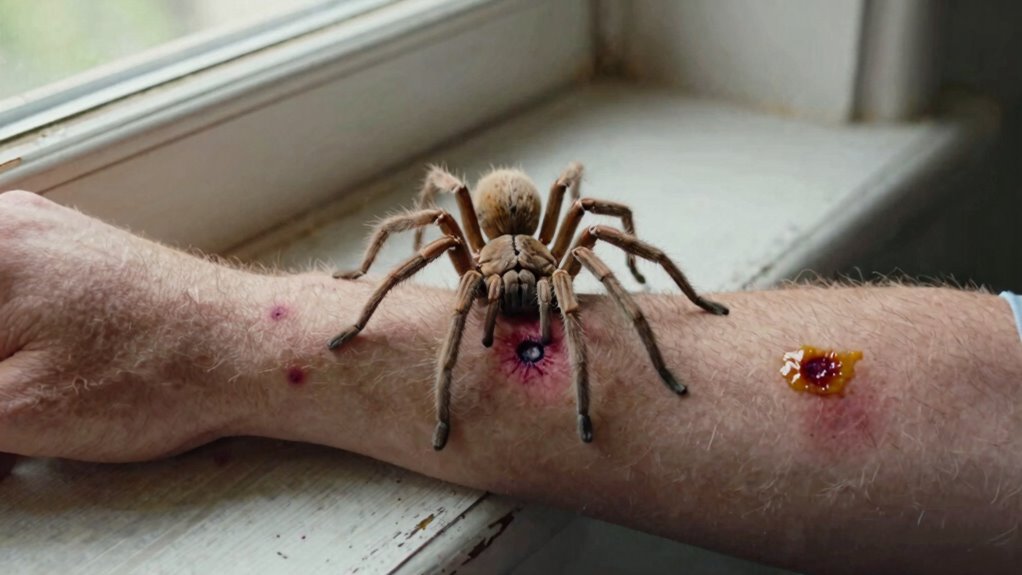
A red bump on your skin could be a mosquito bite, a spider bite, or even a staph infection. Mosquito bites usually itch right away and form a small, raised welt that is easy to treat with common pest control products.
Spider bites often feel like a sharp sting or nothing at first, then may blister or turn purple days later. Staph infections tend to grow steadily worse with spreading redness, warmth, and pus.
If you want to prevent mosquito bites, use a trusted repellent for effective pest control. For suspected spider bites, seal cracks and keep clutter to a minimum. Applying a non-toxic spray around baseboards and corners can also help deter centipedes and other pests that may share your space.
Staph infections require medical attention, not a topical cream from the store. Always monitor any bite or bump for worsening symptoms to stay safe.
Visual Signs
Visual signs are the most practical way to tell a spider bite from a mosquito bite or a staph infection. Even a dermatologist might need a few tools before making a confident call.
Visual identification hinges on lesion morphology, the shape, color, and texture of the sore. A spider bite often presents as a single, sometimes necrotic ulcer with a red halo.
For effective pest control identification, look for a single central blister or ulcer that may turn black. Mosquito bites show up as small, raised, pale pink welts that are intensely itchy.
Staph infections like MRSA appear as red, swollen, painful boils with pus or a honey-colored crust. If you suspect a spider bite, seek professional pest control services to inspect your home environment.
A fast-acting mosquito repellent can help you buy time while treating bites. For staph infections, immediate medical attention is your safest buyer-intent step.
Pain and Progression
Pain tells the story faster than any picture, and it is where these three culprits split ways. A mosquito bite stings briefly, then itches, annoying but your pain tolerance barely gets tested.
A spider bite like the brown recluse often starts painless, then builds to a deep burning ache over hours. This slow escalation ties to venom evolution targeting tissue, making pest control for spiders a smart precaution.
A staph infection throbs steadily, worsening with pressure and often with fever. Progression differs too, as mosquito bites fade in days while spider bites may form a blister that turns dark and necrotic over a week.
Staph spreads fast with red streaks creeping outward, so a rule of thumb stands. If pain worsens past 24 hours or the wound grows, do not wait and see a doctor.
The bottom line is that staph is statistically far more likely than any spider bite. Treat it seriously and consider professional pest control if you suspect spiders in your home.
6 Signs a Spider Bite Needs Emergency Room Care
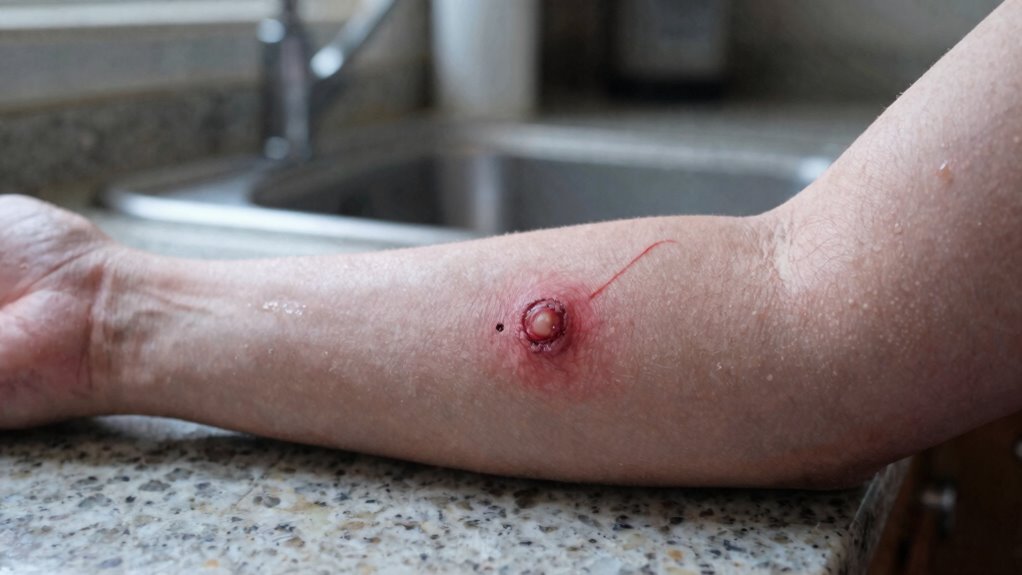
Most spider bites are no big deal, but some scream for medical help. Severe pain that spreads or cramps, a wound that grows instead of heals, and trouble breathing or swallowing are three signs that it is time for emergency room care.
Ignoring these symptoms could turn a bad situation worse. Many arachnophobes might wait too long, but prompt pest control removal of spiders can prevent future bites.
If you suspect a spider infestation, call a professional pest control service. Your health and safety depend on quick action for both medical treatment and home protection.
Severe Pain or Cramping
Severe pain or cramping from a spider bite means you need emergency medical care, not home remedies. Stop guessing about bite location myths and head straight to the hospital.
Children under ten and adults over sixty face higher risks with venom that cramps the abdomen or back. Steady, spreading cramping may tighten the gut like a bad appendix attack within an hour.
Over the counter pain pills like ibuprofen will not touch this unrelenting throb. Rest and ice also fail to ease the pain once it sets in.
Professional pest control can help identify and remove dangerous spiders from your home using products like Talstar One for broad-spectrum barrier protection. For severe pain plus cramping, an emergency room visit is your only safe option.
Growing Wound Site
A growing wound site is the second unmistakable sign that a spider bite has turned serious. While severe cramps target your gut, this symptom attacks your skin with a slow, creeping spread.
The wound expands outward, turning dark or blistered as tissue breaks down. This indicates necrosis, or local cell death, and demands immediate pest control attention.
Spiders only bite when trapped, like in a shoe or bed sheet. So, bite prevention means shaking out clothes and checking dark corners for hidden webs. For effective snake management, similar principles apply with glue traps that safely capture pests without chemicals.
If the wound keeps growing after 24 hours, skip the internet diagnosis. Head to the ER right away for professional treatment and wound care.
That is not a welt. It is a red flag, literally, so do not wait for it to get uglier.
Breathing or Swallowing Trouble
Breathing trouble from a spider bite is a genuine emergency sign, even if it sounds unlikely. Trust your gut and call a pest control professional if you suspect an infestation in your home.
When venom attacks the nervous system or throat, things get serious fast. The throat can swell, causing airway obstruction that feels like a lump you cannot swallow.
Respiratory distress shows up as wheezing, gasping, or panicked shallow breaths. It feels like running a sprint while standing still.
Swallowing becomes impossible, not just painful, turning water into a hazard. These symptoms are not typical spider bite problems and require immediate medical attention.
If you or someone else cannot swallow spit or is fighting for air, skip the home remedies. Call 911 right away for a reptile or spider removal expert if the situation allows.
No spider species is worth risking suffocation. Schedule a pest inspection now to prevent dangerous bites and keep your family safe, and consider placing glue traps for monitoring spider activity in your attic.
What to Do Immediately After a Spider Bite
The first step after a spider bite is to stay calm, as spiders are usually not out to get you. Panicking only raises your blood pressure, so clean the area with soap and water right away.
Apply a cold pack to dull any pain and slow the venom’s spread. Raise the bitten limb if possible to reduce swelling.
Over-the-counter pain relievers can help with discomfort. Watch for signs of an allergic immune response, like hives or swelling far from the bite.
Most common spiders don’t require special treatment, but antivenom availability is limited to serious cases from black widows or brown recluses. If you caught the spider, bring it for identification; otherwise, don’t waste time guessing.
For mild bites, rest and ice are your friends. If you need pest control services to manage spider populations around your home, contact a local professional for safe removal.
For anything beyond a mild bite, call a doctor immediately. Keeping your home pest-free reduces the risk of future bites and buyer-intent searches for spider control solutions. Long-lasting chemical barrier sprays can be applied along baseboards and windowsills to keep spiders away for up to a year.
Spider Bite Risk: Where Spiders Hide at Home
Finding a spider in your home is unsettling, but knowing their favorite hideouts cuts the fear factor in half. These eight‑legged roommates are masters of cover, preferring dark, dry spots where they can wait for prey undisturbed.
Knowing their favorite hideouts cuts your fear of finding a spider in half.
Understanding spider behavior, like their love for clutter, helps you avoid accidental encounters. For effective spider control, focus on closets and storage boxes where shoes, folded blankets, and cardboard piles offer perfect hiding spots.
Black widows often lurk in these undisturbed areas, so pest prevention starts with organization. Garages and basements are prime real estate for spiders, especially near woodpiles and gardening gear. For long-term outdoor protection, consider using a spray that lasts up to six months to keep patios and garages spider-free.
Their venom evolution is fine‑tuned for subduing insects, not people, which is reassuring. Cracks around windows and doors let spiders invite themselves inside during summer heat.
A quick seal job is cheap insurance, costing about ten bucks for caulk. Keep these zones tidy, and your spider bite risk drops dramatically.
How Many People Really Die From Spider Bites Each Year?
The short answer is very few. Between 2010 and 2020, a global study of 2,644 human-spider encounters recorded only 147 deadly bites in news reports.
That is a tiny fraction, especially considering there are over 50,000 spider species worldwide. Fewer than 0.5% can cause serious harm, and correct spider identification is rare.
Most fatal bites come from widow or recluse species, with deaths primarily in children.
For practical pest control, if you spot a spider indoors, call a professional exterminator for safe removal, or consider diatomaceous earth for chemical-free control of crawling insects.
The risk is dramatically lower than most people fear. Arachnophobia affects up to 11.4% of us, but the numbers do not back up the panic.
You are far more likely to be struck by lightning than die from a spider bite.
How to Prevent Spider Bites in Your Home
Most spider bites occur because you accidentally press a spider against your skin, not because it is hunting you. To minimize this, check and shake out clothing, shoes, and bedding before use, especially in warm months.
Seal cracks in walls, windows, and doors with caulk or weatherstripping to block common pest entry points. Eliminate clutter like cardboard boxes and woodpiles near your home, where spiders hide.
Shake out items before wearing or sleeping to prevent surprise contact. Seal entry points with caulk or weatherstripping to stop spiders from getting inside.
Reduce clutter by clearing boxes and debris to remove spider habitats. Spider mythology often exaggerates danger, but the real risk is low.
Venom evolution made most spider bites harmless to humans. Keep your home tidy, and you will rarely need to worry about pest control.
Simple prevention beats panic for effective home protection against spiders. For sealing gaps, consider using brush seal strips with dense nylon bristles to fill uneven spaces that spiders could crawl through.
Frequently Asked Questions
Can Spiders Bite You While You Sleep?
Yes, spiders can bite you while you sleep, but it’s extremely rare. Most spiders avoid humans, and bites happen only when a spider gets accidentally pressed against your skin.
That’s why a simple bedside prevention routine is your best pest control strategy. Shaking out your sheets and keeping your bed away from walls reduces the already tiny risk.
If you want to use a home pest control spray around your bed frame or baseboards, choose a product labeled safe for indoor use. Many mattress encasements also help block spiders and other bugs from reaching you.
The truth is, most so called “bites during sleeping” are actually from fleas, bed bugs, or even skin conditions like eczema. A professional pest inspection can identify what is really causing the marks.
Spiders are not aggressive, and fatalities from spider bites are virtually nonexistent in modern homes. If you need extra peace of mind, shop for a quality bed bug proof mattress cover or a spider repellent device.
Bottom line? Check your bedding if you’re worried, but don’t lose sleep over it. A few smart pest control products and simple habits keep any risk near zero.
Do All Spider Bites Require Medical Treatment?
No, not all spider bites require medical treatment, and most household encounters are harmless. Bite severity depends entirely on the spider venom involved, and most common spiders simply can’t deliver a dangerous dose.
For everyday house spiders, washing the area with soap and water is usually enough, and you can soothe any mild irritation with a cold compress or an over-the-counter antihistamine. If you’re dealing with a recurring spider problem, investing in a quality pest control spray or glue traps can help you avoid bites altogether.
That said, you should seek medical attention if you suspect a widow or recluse bite, since those venoms can cause serious complications. Watch for red flags like severe pain, muscle cramping, fever, or a growing, dark wound that doesn’t heal within a few days.
When in doubt, call your doctor or poison control, especially if you have children, elderly family members, or pets in the home. For proactive protection, consider a professional pest control service or a targeted spider repellent designed for cracks, basements, and attics.
Think of a spider bite like a bee sting: painful and annoying, but rarely a crisis for most people. The smart purchase is a prevention plan, not a panic response, so focus on sealing entry points and reducing clutter where spiders hide.
If symptoms escalate or you’re unsure about the spider species, don’t gamble with your health. A quick medical consult costs little, while a neglected recluse bite can lead to tissue damage that requires much more extensive treatment.
For everyday peace of mind, stock a basic first aid kit and keep a reliable spider killer on hand for occasional sightings. That way, you handle the 99% of harmless bites yourself and know exactly when to call a professional for the rare, dangerous ones.
Are Spider Bites Dangerous for Pets?
Yes, spider bites can be dangerous for pets, especially from venomous species like widows and recluses. A small dog or curious cat poking a dark corner is at higher risk.
Watch for behavioral changes such as excessive drooling, wobbling, or hiding. The bite area might swell or turn red, and black widow venom can cause muscle tremors and pain.
If your pet acts off, check for webs in the garage and call your vet immediately. Professional pest control services can help you eliminate these hazards before a bite happens.
For homeowners seeking reliable spider prevention, an interior and exterior spider treatment package is a smart purchase. Proactive pest control keeps venomous spiders away from your curious furry friends.
Bottom line: a spider bite is not always a death sentence, but it’s no tiny snack either. Don’t wait for symptoms to worsen; fast vet care and regular pest control inspections offer the best protection.
What Should You Do if You See a Spider?
First, don’t panic. Most spiders are harmless and actually help control other pests in your home.
Learn basic spider identification to know the difference between a common house spider and a dangerous one.
If you spot a harmless invader, just leave it alone or gently relocate it using a jar and paper.
For black widows or brown recluses, you need professional pest control services immediately.
A pest control visit for venomous spiders costs roughly $150 to $300 for safe removal and prevention.
Search for “spider pest control near me” when you need fast, expert help with dangerous species.
The best spider repellents include sticky traps, sprays, and caulk to seal entry points around your home.
Bottom line: observe, don’t provoke, and let the experts handle the scary ones.
Regular pest inspections can also stop spider populations before they grow out of control.
Can Spider Bites Cause Long-Term Health Problems?
Yes, spider bites can cause long-term health problems, but it is rare. The real concern is necrotic tissue from recluse bites, where skin dies and takes months to heal, often leaving scars.
Infectious complications like gangrene can set in, though that is uncommon. Widow bites may cause lingering nerve pain or muscle issues that require professional pest control to prevent future encounters.
Most bites are just an annoying bump that vanishes quickly. Treat every bite seriously by cleaning the area and monitoring symptoms, but do not lose sleep over dangerous outcomes.
To protect your home, schedule regular pest control inspections and use spider repellents near entry points. If you spot recluse or widow spiders, contact a licensed exterminator for targeted treatments.
Buy high quality spider traps and barrier sprays to reduce risks. Your best investment is a proactive pest control plan that keeps dangerous spiders away from your family.


