
Can cockroaches fly? The answer is yes—but it depends entirely on the species. Some, like the Cuban cockroach, are strong fliers, while others like the German roach have wings but never take off. This article breaks down which roaches actually fly, why they do it, and what that means for your home. If you’ve spotted a flying roach indoors, it could signal a bigger problem you’ll want to handle fast.
Keep reading to identify the species in your space and find the right pest control solutions below.
At A Glance
- Some cockroach species can truly fly using their membranous hind wings.
- Forewings act as protective shields; hind wings generate thrust for flight.
- The Cuban cockroach is a prolific flier; American cockroaches only glide.
- Male brown-banded cockroaches fly; females have stubby, non-functional wings.
- A flying cockroach indoors may signal a larger infestation needing immediate treatment.
The Short Answer: Yes, Some Cockroaches Can Really Fly
Yes, some cockroaches can truly fly, but wing evolution did not gift every roach with the same aerial talent. Many species crawl, scurry, and hide, their wings reduced to useless flaps for practical pest control.
True flight depends on the hind wings, which are thin, membranous, and built for flapping. The forewings, tougher and darker, act as shields during ground level chaos in your home.
No roach is born a pilot. Nymph development starts wingless, with the young resembling tiny armoured tanks.
Only after several molts, reaching adulthood, do functional wings unfurl for skilled flight. That delayed growth means flying is a final stage perk, not a baby trick.
If you need cockroach control services, remember that flying adults are your main target. For infestations, boric acid powder kills roaches by acting as a stomach poison ingested during grooming. Professional pest solutions focus on breaking this life cycle before wings ever appear.
Which Cockroach Species Are the Best Fliers?
These species invest heavily in flight muscle energy, which means they can sustain powered flight, not just fall with style.
Males of brown-banded cockroaches likewise fly, but females are grounded, which is a real missed connection.
So, if you spot a roach flying toward your porch light, don’t panic. Just remember it’s a Cuban or smokybrown showing off its aerodynamic talents.
For peak flight performance, bet on the Cuban.
If you need professional pest control to manage these flying pests, a 365nm UV light can provide sharper contrast for accurate bed bug or cockroach inspections during home checks.
If you need professional pest control to manage these flying pests, a local exterminator can help remove them from your home.
How Do Cockroach Wings Actually Work for Flight?
A cockroach’s wings come in two distinct pairs, each with a specific job. The hardened forewings act as protective covers, lifting out of the way during flight, whereas the membranous hind wings actually do the flapping.
This setup likewise explains why some roaches, like male brown-banded cockroaches, can fly whereas females of the same species are stuck grounded. It is a clear case of sexual dimorphism in action, which matters for pest control as flying males can spread infestations more quickly. Using bait stations with fipronil can help stop winged invaders from reaching your kitchen or pantry by triggering a deadly ripple effect through the nest.
If you need professional cockroach treatment, understanding which roaches fly helps target your extermination strategy. Seal entry points and use bait stations to stop winged invaders from reaching your kitchen or pantry.
Wing Pair Roles
Adult cockroaches run a two wing system, and the division of labor is surprisingly clear cut. The hardened forewings act like protective covers, basically a flight jacket for the delicate hind wings.
The real work happens underneath. Flight muscle attachment points anchor directly to the membranous hind wings, which do all the actual flapping.
Forewings shield and hind wings lift. This biology is key for any pest control treatment targeting flying cockroaches.
Here is the breakdown. Forewings are tough and static, held out during flight.
Hind wings are flexible and powered by muscle to generate thrust. This is not a partnership of equals, more like a flight attendant and a pilot.
One handles safety, the other handles takeoff. So when you see a cockroach fly, the hind wings are earning their keep.
Forewings are just along for the ride. Understanding these wing pair roles helps you identify species when choosing home pest control solutions. Fast-acting insecticide products can deliver an immediate knockdown effect on contact, which is crucial for targeting flying cockroaches before they escape.
Forewings Versus Hind Wings
The forewings and hind wings of a cockroach are not a tag team; they are more like a bodyguard and a stunt double. A wing texture comparison reveals the key difference: forewings are tough, leathery covers, whereas hind wings are delicate, membranous, and fan-like.
The forewings protect the hind wings, which actually do the flapping work. Flight muscle attachment is likewise critical. These powerful muscles connect directly to the hind wing base, not the forewings.
So, when a cockroach flies, it lifts its forewings out of the way, like raising a shield. Then the hind wings take over, beating rapidly.
The forewings are just armor; the hind wings are the engine. That is the real flight setup.
For effective pest control, understanding cockroach flight can help you target treatments during their most active moments. Professional pest control services often focus on hiding spots and breeding areas to stop infestations before they start.
If you need cockroach control solutions, look for treatments that address both nymphs and adults. A comprehensive pest control plan will include sealing entry points and using targeted sprays or baits that eliminate entire colonies by breaking the reproduction cycle.
Sexual Dimorphism Observed
Many assume all cockroaches fly the same way, but sexual dimorphism actually changes the rules. In brown-banded cockroaches, males have full, functional wings for flight, which is vital for their mating behaviors like chasing females.
Females, by contrast, get stubby, useless wings, a real evolutionary letdown. This difference ties directly to wing development timing. Males grow theirs fully at adulthood, while females halt early.
So a male can zip to a light source or a partner, whilst his counterpart is grounded, scuttling instead. If you spot a flying roach, it is likely male, so do not assume every roach is a pilot.
For effective pest control, focus on identifying the males because they are stronger fliers and may enter your home through open windows. A professional exterminator can help you target both sexes during a home inspection.
It is not a bug, it is a feature of nature prioritizing reproduction over aerial acrobatics. If you need cockroach prevention tips, check for gaps around doors and use Fipronil-based gels for long-term control and residual protection.
Why Some Cockroaches Have Wings but Can’t Fly
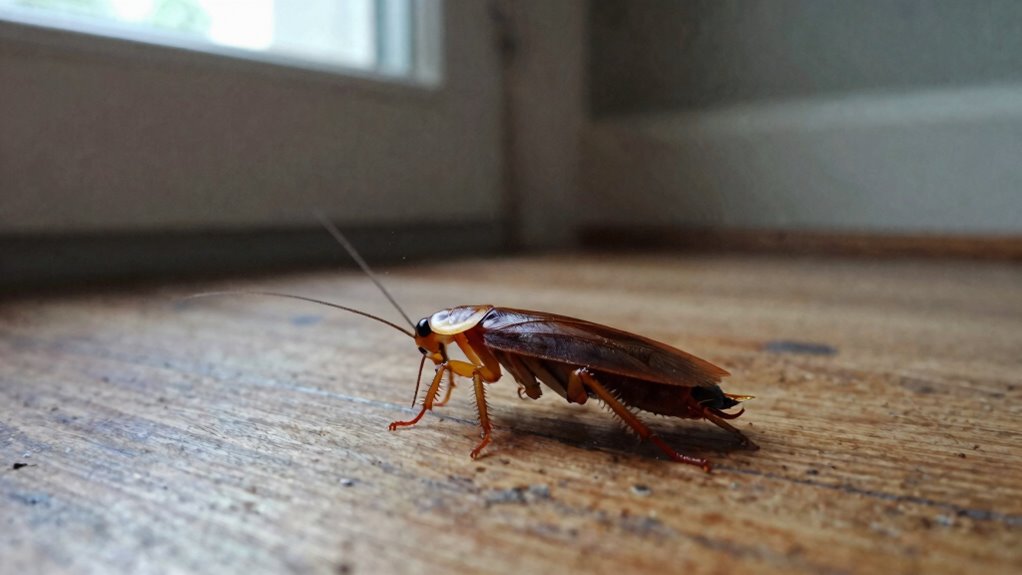
Having wings might seem like a ticket to the skies, but evolution can be a bit of a practical joker. For some cockroaches, wings are more evolutionary baggage than flight gear.
The primary culprit is genetic trade-offs. Developing strong flight muscles consumes energy that could otherwise fuel reproduction or faster running, a wiser survival bet in cluttered, damp environments.
Genetic trade-offs mean wing muscles steal energy from reproduction and survival.
Their evolutionary history explains the rest. Burrowing species, like the Australian rhinoceros cockroach, once had ancestors that flew, but over millennia, underground life made wings useless.
Now they possess stubby, non-functional vestiges that simply get in the way. If you spot a roach in your home and need professional pest control, remember that even flightless species can infest kitchens and bathrooms. For persistent indoor ant problems, child-resistant stations provide safe and effective colony elimination alongside roach treatments.
Even female brown-banded roaches have small, useless wings, whereas males, needing to find mates, keep theirs functional. That means a flying roach indoors could signal a larger infestation needing immediate pest control treatment.
In the end, a roach’s wings are a snapshot of its past, not its future. Evolution gifted them, then shrugged and took flight away, leaving you to deal with these hardy invaders using durable traps and sprays.
When and Why Do Flying Cockroaches Take to the Air?
Most cockroaches prefer to scuttle rather than fly, but for some species flight is a calculated choice. Smokybrown cockroaches take to the air to find food, humid spaces, or comfortable temperatures, not to flee in panic.
This deliberate flight is part of roach migration patterns, a methodical search for better living conditions. Cuban cockroaches are among the most prolific fliers, actively entering trees and open windows in homes.
Interestingly, this limited flight capability exists despite a general trend toward evolutionary flight loss in many pest species. So these insects fly to find resources, not to escape a shoe or a spray can.
Understanding when cockroaches flies helps with targeted pest control, especially during warm humid months. If you see flying roaches near your home, it is a sign they are seeking food or moisture indoors. For comprehensive control, apply residual sprays in hidden spots, corners, and entry points to prevent re-infestation for months.
Where and When Do Flying Roaches Invade Homes?
Flying roach invasions typically start in tropical regions where warmth and humidity allow them to thrive all year. These pests are mostly nocturnal, so their peak activity happens after dark when they search for food or mates.
Bright outdoor lights strongly attract them, pulling roaches toward windows and doors like a poorly planned porch party. To prevent flying roaches from entering, focus on sealing cracks and reducing moisture around your home.
Turning off unnecessary outdoor lights or switching to yellow bug bulbs can help keep them away. For effective pest control, consider professional roach treatment if you notice regular nighttime activity near entry points. To minimize risks to non-target animals, tamper-resistant bait stations are recommended for any rodenticide use near homes.
Tropical Regions Primary
Tropical and subtropical regions are where flying cockroaches truly shine and invade. The tropical distribution overlap of species like the Cuban cockroach and smokybrown cockroach creates a hotspot for home invasions.
These regions warmth and humidity, combined with habitat deforestation impact, push flying roaches indoors when their natural shelters vanish. Deforestation is basically eviction for roaches, so they fly to your porch light instead.
They enter through open windows, doors, or cracks, seeking food and dampness. For homeowners, sealing entry points and reducing outdoor lighting near doors cuts invasion risk. Maintaining indoor humidity between 50-60% with a dehumidifier helps create an environment that is unsuitable for silverfish and other moisture-loving pests like cockroaches.
Professional pest control for flying roaches often targets these entry pathways. Using roach baits and gel treatments near potential access points can stop infestations before they start.
Inspecting for gaps around utility lines and vents is a key roach prevention step. Keeping indoor humidity low with a dehumidifier also discourages smokybrown cockroaches from settling.
To reduce flying roach problems outside, switch outdoor lights to yellow bug bulbs. Clean up leaf litter and firewood piles to remove hiding spots near your home.
Nighttime Flight Activity
It happens after dark, and flying roaches use the cover of night to launch their invasions. They’re not swooping in from the yard for fun; they’re actively seeking warmth, food, and dampness.
Their overhead entry is the sneaky part, often through unsuspecting vents, attic gaps, or even open bathroom windows. You might hear a soft thud against a ceiling fan, but they rarely announce themselves loudly.
Most action peaks between dusk and midnight, when the house quiets down. Smokybrowns, for instance, might glide from a neighbor’s tree straight onto your roof, then slip inside.
Cuban roaches are bolder, buzzing right through a screen door left ajar. If you’re dealing with frequent night sightings, this is a clear sign you need targeted roach control near entry points.
Bottom line: if you spot one flying at night, check your roofline and windows first. That’s their front door, and sealing those gaps is your first step in roach prevention.
For lasting results, consider professional pest inspection services to locate hidden nesting zones in your soffits or eaves. A quick pest treatment plan for flying roaches can stop their nightly glide path before it becomes an infestation. A quarterly fogging schedule provides the best defense for long-term pest control.
Light Attraction Triggers
Some lights act like a dinner bell for flying cockroaches, especially certain species. Porch bulbs, windows, and streetlamps draw smokybrown and Cuban roaches on warm, humid nights.
This glow triggers their mating and dispersal flights, which explains sudden invasions near wooded areas. Urban infestation patterns often spike around artificial light sources, turning a quiet evening into an aerial problem.
Flying roaches use light as a signal for finding mates, not just food. Homes with bright exterior lights report more roof level entry points.
Closed windows do little, since gaps under doors are prime entry spots. Reducing outdoor lighting is a cheap, effective first step in your pest control plan.
Pest control tactics often fail when homeowners ignore lighting. Turning off unneeded bulbs and using yellow bug lights can cut invasions dramatically.
This saves you from midnight surprises and costly exterminator visits. For serious prevention, combine reduced lighting with sealing gaps and professional pest control services. Ultrasonic deterrents offer a complementary, humane option that operates continuously outdoors, using high-frequency sounds to repel pests without chemicals.
Common Pest Species: Which Cockroaches Fly and Which Don’t
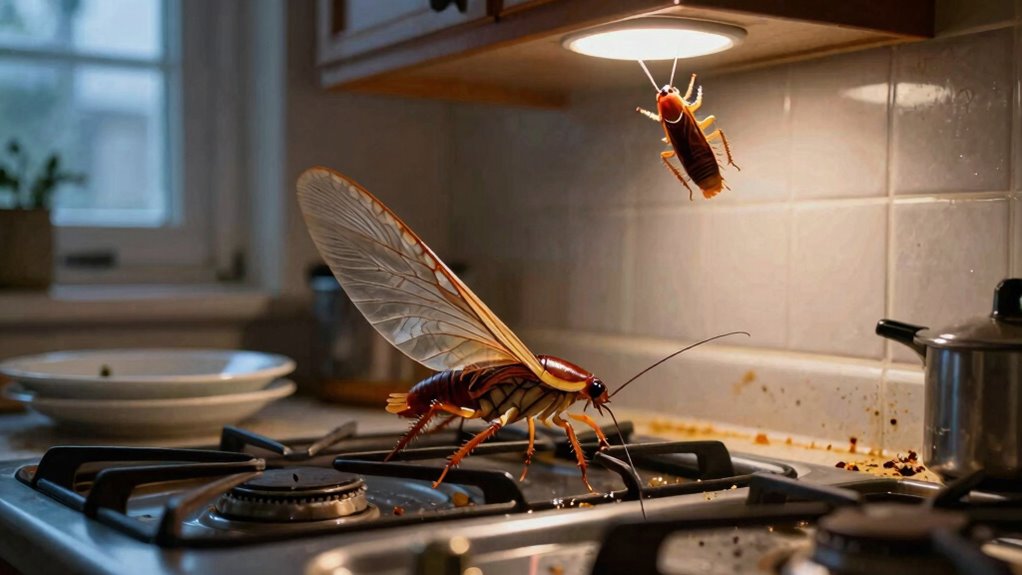
Of the four pest cockroach species that routinely invade homes, only one can truly fly, and even that comes with a catch. The German cockroach, despite its Southeast Asian origins, cannot fly at all; its wings are purely decorative. For comprehensive control, use Combat Max Roach Killing Gel which targets German, American, and Oriental cockroaches.
Oriental cockroaches, often called water bugs, are likewise earthbound, preferring damp basements over aerial escapades. The American cockroach, a large invader, can glide from high spots but lacks sustained flight for effective pest control.
Only the brown-banded cockroach shows real ambition to take off. Males fly readily, whereas females have stubby, useless wings for airborne travel.
This matters for human health risks, since flying roaches can spread allergens and pathogens over wider areas. They rarely target people directly, but a professional pest inspection can identify hidden infestations.
Bottom line: if you see wings, don’t panic, but keep the lid on your trash. Contact your local exterminator for targeted cockroach treatment options.
Should You Worry About a Cockroach Flying at You?
Why would a flying cockroach aim for you? It won’t. Cockroaches don’t attack people; they flee from them.
When a roach flies, it’s usually gliding toward a light or a damp hiding spot, not your face. Still, a direct hit is startling and can trigger allergic reactions.
It’s a startled glider, not a guided missile. American cockroaches glide down from ceilings, accidentally aiming at warm bodies.
Allergen risks spike with flying roaches. Their droppings and shed skins carry tropomyosin, which can worsen asthma symptoms. Plant oils like peppermint can block roach nerve signals and offer a safer alternative for managing these pests around sensitive individuals.
Flying roaches signal a large infestation. Smokybrown cockroaches fly to find food and water, meaning hidden populations are nearby.
Pest control solutions work well for these pests. Seal cracks, use sticky traps under sinks, and consider professional treatment for 150 to 300 dollars.
The bottom line is a flying roach is gross but harmless. Don’t panic, do seal your home, and remember you’re faster than it is.
Frequently Asked Questions
Can Baby Cockroaches Fly?
No, baby cockroaches cannot fly. They are nymphs, and nymph development means they lack wings entirely.
Wing growth only happens after their final molt into adulthood. So flight readiness is zero for the little guys.
Think of them as wingless, scuttling teenagers. All legs, no lift.
They rely on crawling and hiding until they mature. This solid survival strategy keeps them out of the air and under your radar.
If you spot tiny roaches in your kitchen, a targeted roach bait or gel can stop them before they grow wings. For heavy infestations, professional pest control services offer the most effective long term solution.
Knowing what stage of cockroach life cycle you are dealing with helps you choose the right treatment. Always inspect cracks and crevices where nymphs hide and feed.
Do Flying Cockroaches Bite People?
A flying cockroach bite is extremely rare and not something you need to lose sleep over. These pests have mouthparts designed to scrape and chew decaying organic matter, not human skin.
The risk of a cockroach bite is near zero for healthy people, though a nibble might occur on soft or dead skin if the insect feels trapped. Think of them as clumsy flying garbage disposals, not tiny vampires.
They would rather flee than fight, so focusing on professional cockroach control is far more important than worrying about bites. If you see flying cockroaches in your home, you likely have a serious infestation that needs immediate attention.
Investing in roach bait stations, gel treatments, or a targeted aerosol spray can keep these pests from taking over your kitchen or bathroom. For long term prevention, seal cracks and crevices around windows and doors and reduce moisture sources.
Bottom line, the bite risk is minimal, so prioritize effective pest control solutions over bite anxiety. Contact a licensed exterminator for a home inspection if you spot flying cockroaches regularly.
How Fast Can a Flying Cockroach Go?
That depends, since cockroach aerodynamics aren’t built for speed records. Most flying roaches, like smokybrowns, cruise at roughly 3 to 5 miles per hour, which is about a brisk walk.
Wing evolution in roaches prioritizes short, controlled glides over raw velocity. Some Cuban cockroaches might hit faster bursts, but they are not fighter jets.
For comparison, a housefly zooms past at 4 to 5 mph. So don’t expect a flying cockroach to outrun you.
It is more about getting from point A to point B, usually toward a light or away from a shoe. If you are dealing with smoky brown roaches or other flying species, the best pest control approach is to target their entry points and nesting sites.
Using a quality insecticide spray or bait stations around doors and windows can stop these pests before they take off. For fast elimination, look for pest control products labeled for flying roaches, as they are designed to handle both crawling and airborne threats.
Knowing their speed helps you choose the right treatment strategy. Bottom line: while they won’t win a race, a flying cockroach can still surprise you, so invest in a reliable roach killer to keep them grounded.
Are There Cockroaches That Fly Silently?
Yes, some cockroaches fly nearly silently, a silent flight adaptation that aids their nocturnal navigation. Smokybrown and Cuban species, for example, produce minimal wing noise, nothing like a buzzing bee.
Their membranous hind wings flap subtly, letting them ghost through humid air while avoiding predators. This quiet skill isn’t common, so German cockroaches can’t fly at all.
If you hear nothing but see a shadow, it might be a flying roach. Bottom line, silent fliers exist, but they’re not your typical pest.
For effective pest control, focus on identifying the species in your home. A professional inspection can reveal if you’re dealing with silent fliers or other roach types.
Buying the right roach bait or spray targets these pests directly. Look for products labeled for flying cockroaches to ensure coverage.
Remember, Smokybrown roaches often enter through gaps in walls or windows. Sealing entry points is a key step in any pest management plan.
Consider using glue traps to monitor activity near humid areas. This helps you choose the best treatment for your specific situation.
What Attracts Flying Cockroaches to Lights?
Flying cockroaches, like smokybrown or Cuban species, are strongly drawn to lights due to a mix of attraction and nocturnal confusion. Their eyes are adapted for dim environments, so artificial lights mimic the moon’s role and throw off their natural navigation.
This behavioral quirk often leads them right to your porch lights or through open windows, especially in warm, humid regions. If you’re struggling with a roach infestation near entry points, targeted pest control products like UV light traps can reduce the problem.
These pests aren’t smart; they are easily tricked by a bright bulb into entering your home. To prevent flying cockroach invasions, seal cracks around windows and switch to yellow bug lights, which are less attractive.
For long term relief, consider professional grade pest control baits or insect growth regulators that target breeding sites. You can make a smart purchase by choosing a roach killer that combines light traps with gel baits for maximum effectiveness.


